
Chang (verb) in New Zealand Sign Language (NZSL)
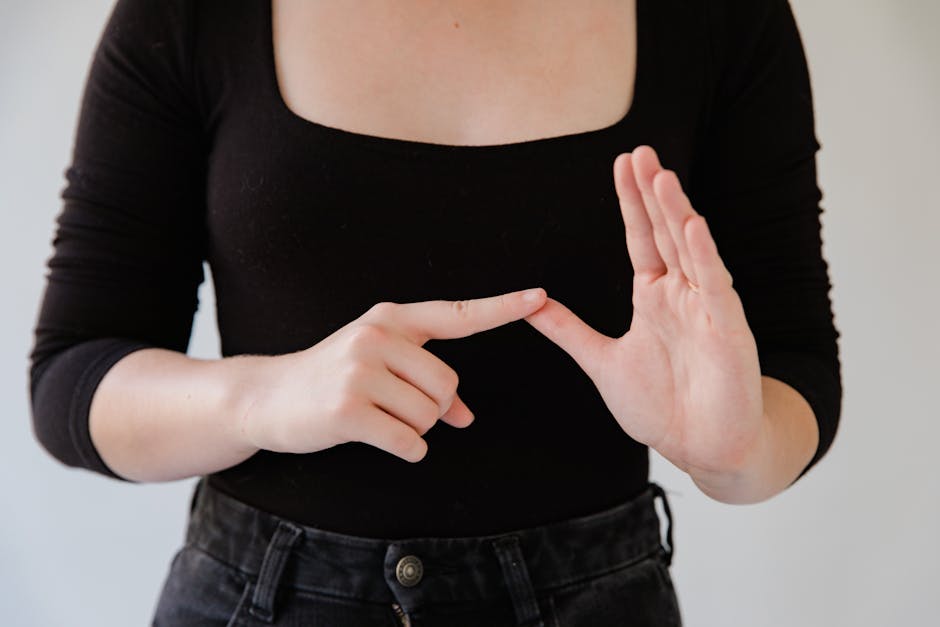
The sign for “change, exchange, adapt, alter, modification, replace, revise” is commonly used in various contexts within the NZ Deaf community. You might use it when discussing changes in plans, exchanging items, or modifying something. This sign embodies the fluidity and adaptability valued by Deaf culture in New Zealand.
Table of Contents
How to Sign “Change, Exchangeadapt, Alter, Alteration, Change Over, Modification, Modify, Replace, Reverse, Revise, SwaptīNi, Whakawhiti” in NZSL
- Start with both hands in a flat ‘B‘ shape, palms facing down.
- Position your hands a few inches apart in front of your chest.
- Quickly bring your hands together, then move them outward to the sides, as if you are exchanging or altering something.
- As you move your hands, maintain a neutral but engaged facial expression to convey the action of change.
Common Mistakes
- Using a closed fist instead of the flat ‘B‘ handshape can lead to confusion with other signs.
- Not maintaining the appropriate distance between the hands may result in an unclear sign.
- Failing to use facial expressions can make the sign less impactful or misunderstood.
NZSL vs ASL
In NZSL, the sign for “change” is performed with a flat handshape and a lateral movement, while in ASL, it often involves a different handshape and more intricate movement. This illustrates the unique characteristics of NZSL and its distinct evolution influenced by local culture, including Māori signs.
Related Signs
- (All Of) You – This sign refers to a group of people.
- (Baby’s) Dummy – Used to refer to a pacifier for infants.
- (Be) Careful – A sign used to express caution.
- (Be) Passive – This sign conveys the idea of being passive or inactive.
Frequently Asked Questions
How can I use “change” in a sentence?
You might say, “I want to change my plans,” using the sign for change as you express it.
Are there regional variations for this sign across New Zealand?
Most variations are subtle, but some regions may have different hand movements or facial expressions that reflect local Deaf culture.
What are some signs similar to “change”?
Related signs include “modify,” “exchange,” and “replace,” which all convey different aspects of change.
Can I use this sign in a formal setting?
Yes, this sign is versatile and can be used in both casual and formal discussions about changes or modifications.
What tips do you have for mastering this sign?
Practice in front of a mirror to ensure your handshape and movement are clear, and don’t forget to use your facial expressions to convey meaning.
Is there a specific context where this sign is more commonly used?
This sign is often used in discussions about plans, projects, or any situation where something is being altered or exchanged.
Practice This Sign
Try signing Change, Exchangeadapt, Alter, Alteration, Change Over, Modification, Modify, Replace, Reverse, Revise, SwaptīNi, Whakawhitiverb with your camera and get AI coaching on your handshape, movement, and location.
Free · No signup required