
Blurry in New Zealand Sign Language (NZSL)
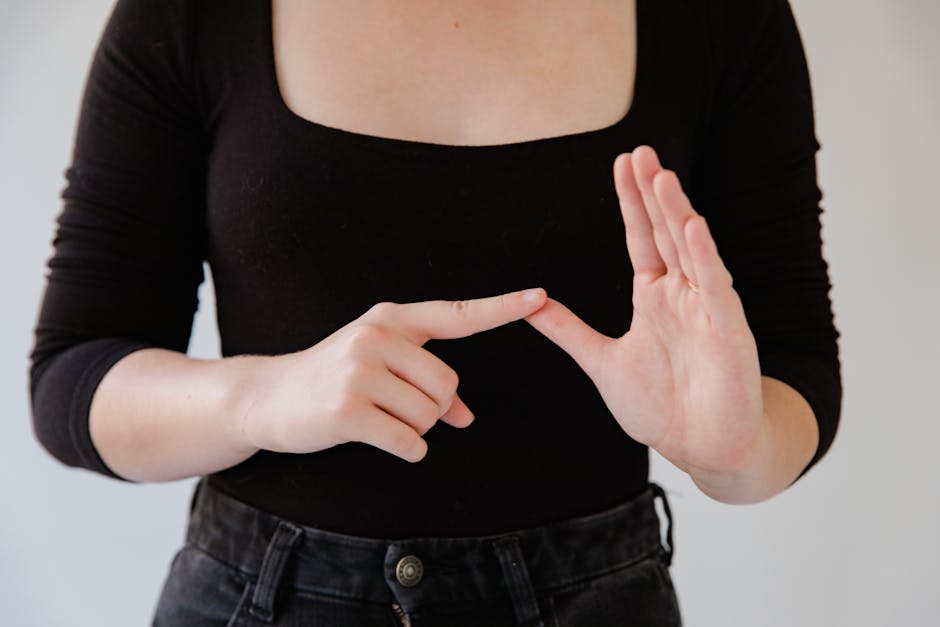
The NZSL sign for “blurry,” “opaque,” “unclear,” or “vague” (rehurehu) is commonly used in various contexts, such as describing images, feelings, or ideas that lack clarity. This sign is essential for expressing uncertainty or indistinctness within conversations in the New Zealand Deaf community.
Table of Contents
How to Sign “Blurryopaque, Unclear, Vaguerehurehuadjective” in NZSL
- Start with your dominant hand in a flat ‘B’ shape (palm facing down).
- Position your hand in front of your face, about an arm’s length away.
- Gently move your hand back and forth while slightly shaking it to convey the idea of blurriness.
- Maintain a facial expression that reflects uncertainty or confusion to enhance the meaning.
Common Mistakes
- Some learners may forget to incorporate appropriate facial expressions, which are crucial for conveying the sign’s meaning.
- Using too much force in the hand movement can make the sign look aggressive instead of blurry or vague.
- Positioning the hand too close to the body can make the sign unclear; it should be at arm’s length for better visibility.
NZSL vs ASL
In NZSL, the sign for “blurry” involves a flat hand shape that is moved to express vagueness. In contrast, ASL uses a different hand shape and motion to convey a similar meaning. This highlights the unique characteristics of NZSL, influenced by both local culture and the Deaf community’s preferences.
Related Signs
- Opaque – Refers to something that is not transparent or clear.
- Clear – The opposite of blurry, indicating clarity and sharpness.
- Fuzzy – Signifying something that is soft or not sharply defined.
- Undefined – A term used for things that lack a clear definition or boundary.
- Vague – Directly relates to the concept of having an unclear meaning or representation.
Frequently Asked Questions
How can I use “blurry” in a sentence?
You might say, “The image is blurry” by signing the sign for ‘image’ followed by ‘blurry.’
Are there regional variations of this sign in New Zealand?
While the sign is generally consistent across New Zealand, some regions may have slight variations in movement or facial expressions.
What are some signs similar to “blurry”?
Signs like “fuzzy” and “vague” share similar meanings and contexts, often used interchangeably depending on the situation.
What tips do you have for learning this sign?
Practice in front of a mirror to check your facial expressions and hand movements. Watching native signers can also help you grasp the nuances.
Can “blurry” be used in emotional contexts?
Yes, you can express feelings as “blurry” to describe confusion or uncertainty about emotions.
What facial expressions should I use?
Facial expressions should reflect uncertainty or confusion, enhancing the clarity of the sign.
How do I sign “clear” in contrast to “blurry”?
To sign “clear,” you would use a different hand shape and motion, indicating clarity and distinctness.
Practice This Sign
Try signing Blurryopaque, Unclear, Vaguerehurehuadjective with your camera and get AI coaching on your handshape, movement, and location.
Free · No signup required