
Quiet in British Sign Language (BSL)
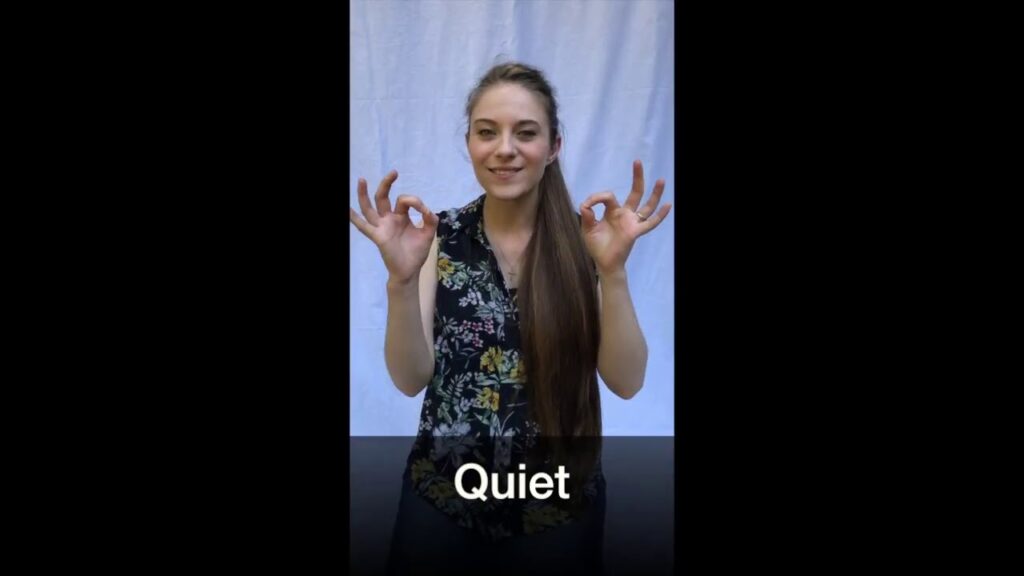
The sign for “quiet” in BSL conveys the idea of silence or low noise levels. It is commonly used in various contexts, such as asking for silence in a classroom, during a performance, or simply to remind someone to keep their voice down. This sign reflects the importance of communication and respect within the UK Deaf community.
How to Sign “Quiet” in BSL
- Start with your dominant hand in a flat ‘B’ handshape, with fingers extended and together, palm facing down.
- Position your hand near your mouth, approximately at chin level.
- Move your hand slightly away from your mouth while maintaining the ‘B’ handshape.
- As you move your hand, use a facial expression that indicates seriousness or calmness, such as slightly lowering your eyebrows.
- Finish the movement by bringing your hand back towards your mouth gently, reinforcing the concept of quietness.
Common Mistakes
- Forgetting to use the appropriate facial expressions, which can change the meaning of the sign.
- Using an incorrect handshape, such as a fist instead of a flat ‘B’ handshape.
- Not moving the hand away from the mouth adequately, which can make the sign unclear.
BSL vs ASL
In BSL, the sign for “quiet” involves a specific handshape and movement away from the mouth, while in ASL, the sign may differ in handshape and gesture. BSL often uses more facial expressions to convey meaning, making it distinct within its own grammatical structure.
Related Signs
- Silence – A sign to indicate complete quietness.
- Shhh – A gesture used to ask for silence, often with a more urgent tone.
- Loud – The opposite of quiet, indicating a high volume of sound.
- Noise – Refers to any unwanted or disruptive sound.
- Calm – Often associated with quietness, indicating a peaceful atmosphere.
Frequently Asked Questions
How can I use “quiet” in a BSL sentence?
You can use “quiet” as a topic, for example: “QUIET-CLASS” to mean “The class is quiet.” Remember to use appropriate non-manual features to enhance your sentence.
Are there regional variations for the sign “quiet”?
While the sign is generally consistent across the UK, some regional variations may exist. Be open to learning from local signers in your area.
What are some similar signs to “quiet”?
Signs like “silence” and “shhh” convey similar meanings and can be used interchangeably in certain contexts.
What tips do you have for learning this sign?
Practice in front of a mirror to check your facial expressions and handshape. Watching native signers can also help reinforce your learning.
Can I use “quiet” in different contexts?
Yes, “quiet” can be adapted to various situations, such as asking for silence in a crowded space or indicating a need for calm.
What if I struggle with the hand movements?
Break down the sign into smaller parts and practice each movement slowly. Consistent practice will help improve your fluency.
Is facial expression really that important?
Absolutely! Facial expressions are a key part of BSL grammar and help convey emotions and nuances in meaning.
Practice This Sign
Try signing Quiet In Bsl with your camera and get AI coaching on your handshape, movement, and location.
Free · No signup required