
Panic Attack in British Sign Language (BSL)

The sign for “panic attack” is an important term within the UK Deaf community, reflecting a mental health experience that many may encounter. This sign is commonly used in discussions about mental health awareness, support, and personal experiences related to anxiety and panic attacks.
How to Sign “Panic Attack” in BSL
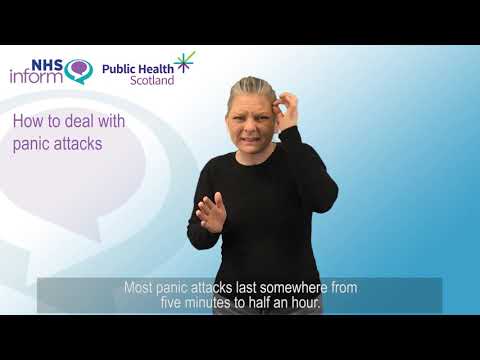
- Start by holding both hands in front of your chest, with fingers spread and palms facing each other.
- With a slight bend in your elbows, move your hands outward and away from your body in a sweeping motion, as if you are pushing something away.
- As you make this movement, furrow your brow slightly to show concern or distress, which reflects the emotional aspect of a panic attack.
- Finally, bring your hands back towards your chest while maintaining the facial expression of concern, ending the sign.
Common Mistakes
Some common errors when signing “panic attack” include:
- Not using appropriate facial expressions, which are crucial to conveying the emotional weight of the sign.
- Executing the hand movement too quickly, which can make it difficult for others to understand the sign.
- Forgetting the topic-comment structure, where the topic (panic attack) should be clearly established before the sign is made.
BSL vs ASL
The sign for “panic attack” differs significantly between BSL and ASL. In BSL, the focus is on the sweeping hand movement and facial expressions to convey the emotional aspect, while ASL may use a more static handshape and different non-manual signals. Awareness of these differences can aid in effective communication across communities.
Related Signs
- Anxiety – a sign used to express feelings of nervousness or worry.
- Help – a sign to call for assistance or support.
- Relax – a sign indicating the need to calm down or ease tension.
- Support – a sign representing emotional or physical assistance.
- Health – a sign related to overall well-being.
Frequently Asked Questions
How can I use “panic attack” in a BSL sentence?
You can say, “I had a panic attack yesterday,” by signing “I” (pointing to yourself), then “panic attack” and “yesterday” with the appropriate signs.
Are there regional variations for this sign in the UK?
While the sign for “panic attack” is generally consistent across the UK, some regions may have slight variations in hand movement or facial expression. It’s useful to learn from local Deaf communities.
What are some similar signs to “panic attack”?
Signs like “anxiety,” “stress,” and “overwhelmed” can convey related feelings and may be used in similar contexts.
Any tips for learning this sign effectively?
Practice in front of a mirror to ensure your facial expressions match the sign’s meaning, and try to learn from a fluent BSL user for correct execution.
Can I use this sign in different contexts?
Yes, you can use “panic attack” in various contexts, such as discussing mental health, personal experiences, or even in educational settings focused on awareness.
Practice This Sign
Try signing Panic Attack In Bsl with your camera and get AI coaching on your handshape, movement, and location.
Free · No signup required