
Magic in British Sign Language (BSL)

The sign for “magic” in British Sign Language (BSL) represents the concept of wonder and enchantment. This sign is often used in conversations about magic shows, fantasy stories, or anything that evokes a sense of mystery and excitement in the UK Deaf community.
How to Sign “Magic” in BSL
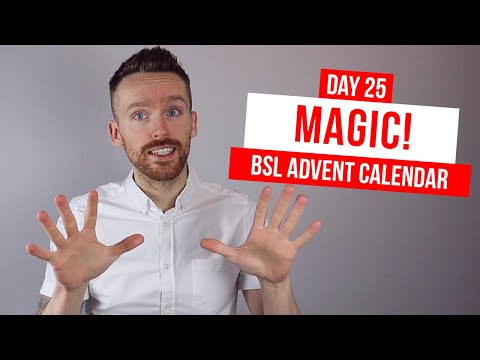
- Start with your dominant hand in a flat shape, fingers together and palm facing down.
- Position your hand about shoulder height, slightly in front of you.
- With a smooth motion, move your hand in a small circle while rotating it so that your palm faces upwards.
- As you perform the circular motion, incorporate a facial expression that conveys wonder or surprise—eyebrows raised and mouth slightly open can enhance the meaning.
- Finish the sign by bringing your hand back to the starting position, maintaining the facial expression for emphasis.
Common Mistakes
- Forgetting to use facial expressions, which are crucial in BSL to convey emotions and context.
- Using a flat hand instead of the correct hand shape, which can confuse the meaning.
- Neglecting the movement aspect of the sign; it should be circular to represent the idea of magic effectively.
BSL vs ASL
In American Sign Language (ASL), the sign for “magic” differs significantly from BSL. ASL typically uses a different hand shape and movement to represent the concept, reflecting the unique grammar and cultural nuances of each sign language. BSL emphasises the non-manual features more prominently in its signs.
Related Signs
- Magic Show – The performance of magic tricks.
- Fantasy – Related to stories that evoke imagination and magic.
- Wonder – Expressing amazement or curiosity.
- Trick – A common term associated with magic performances.
- Illusion – Often related to magic and the perception of reality.
Frequently Asked Questions
How can I use “magic” in a BSL sentence?
You can say “I love magic” by signing “I” (point to yourself), then “love” (cross arms over your chest), followed by the sign for “magic.”
Are there regional variations for the sign “magic”?
While the sign is generally consistent, some regions may have slight variations in hand shape or movement style. It’s good to learn from local Deaf signers.
What are some similar signs to “magic”?
Signs like “wonder” and “fantasy” are closely related and can often be used in similar contexts.
Any tips for learning this sign?
Practice in front of a mirror to see your hand shape and facial expressions, and consider joining a BSL class or group for feedback.
Can “magic” be used in storytelling?
Absolutely! Using the sign while telling a story can enhance the narrative, especially in tales involving fantastical elements.
What is the importance of facial expressions in this sign?
Facial expressions convey emotions and context, making the sign more impactful and engaging for the viewer.
Practice ASL Signs
Use your camera to practice signs and get real-time AI feedback on your technique.
Free · No signup required