
Levels Are There in British Sign Language (BSL)

The sign for “how many British Sign Language levels are there” is often used in discussions about BSL qualifications and learning pathways. It helps the Deaf community inquire about the various levels of proficiency in BSL, especially when considering courses or assessments. This sign is integral in educational settings and among learners.
How to Sign “Levels Are There” in BSL
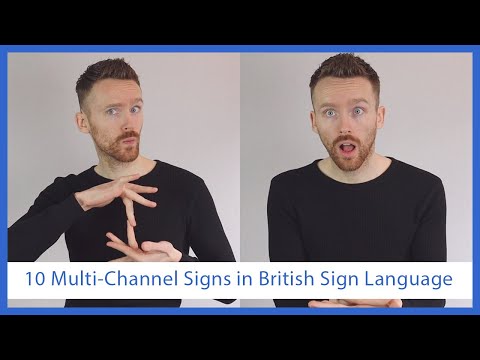
- Start with your dominant hand in a “flat hand” shape (palm facing down). Place it in front of you, at about chest height.
- Move your hand slightly forward and then pull it back towards your body, indicating the concept of “how many.” Your facial expression should show curiosity or inquiry.
- Next, switch to both hands in a “C” shape. Position them side by side, slightly apart, at shoulder height. This represents “levels.” Make a small upward motion with both hands to suggest multiple levels.
- For the final part, maintain the “C” hand shapes and move them slightly apart, as if indicating a range of levels available. Your eyebrows should be raised to emphasize the questioning aspect.
Common Mistakes
- Forgetting to use the non-manual features, such as facial expressions, which are crucial for conveying the question.
- Using only one hand instead of both to indicate “levels,” which can misrepresent the concept of multiple levels.
- Not maintaining the appropriate space when signing, leading to confusion about the number of levels being referred to.
BSL vs ASL
In BSL, the sign for “how many” is distinct and incorporates specific non-manual features. In contrast, American Sign Language (ASL) has a different sign that focuses more on the hand shape and movement without the same emphasis on facial expressions. This highlights the unique grammar and structure of BSL compared to ASL.
Related Signs
- 1 – The sign for the number one.
- 10 – The sign for the number ten.
- 11 – The sign for the number eleven.
- 12 – The sign for the number twelve.
- 100 – The sign for the number one hundred.
Frequently Asked Questions
Can I use this sign in a full sentence?
Yes, you can use this sign to ask about the levels of BSL qualifications, such as “How many BSL levels are there?”
Are there regional variations in this sign?
While the core sign remains the same, some regional variations in facial expressions or hand movements might exist across the UK.
What are some similar signs in BSL?
Related numerical signs, such as 1 or 10, can be useful when discussing levels.
Any tips for mastering this sign?
Practice in front of a mirror, focusing on your facial expressions and maintaining the correct hand shapes and movements.
How can I learn more about BSL levels?
Consider enrolling in a BSL course that outlines the different levels and provides structured learning opportunities.
Is this sign used in formal settings?
Yes, it is commonly used in educational contexts, such as during BSL assessments or discussions about certification levels.
Practice ASL Signs
Use your camera to practice signs and get real-time AI feedback on your technique.
Free · No signup required