
Labour in British Sign Language (BSL)
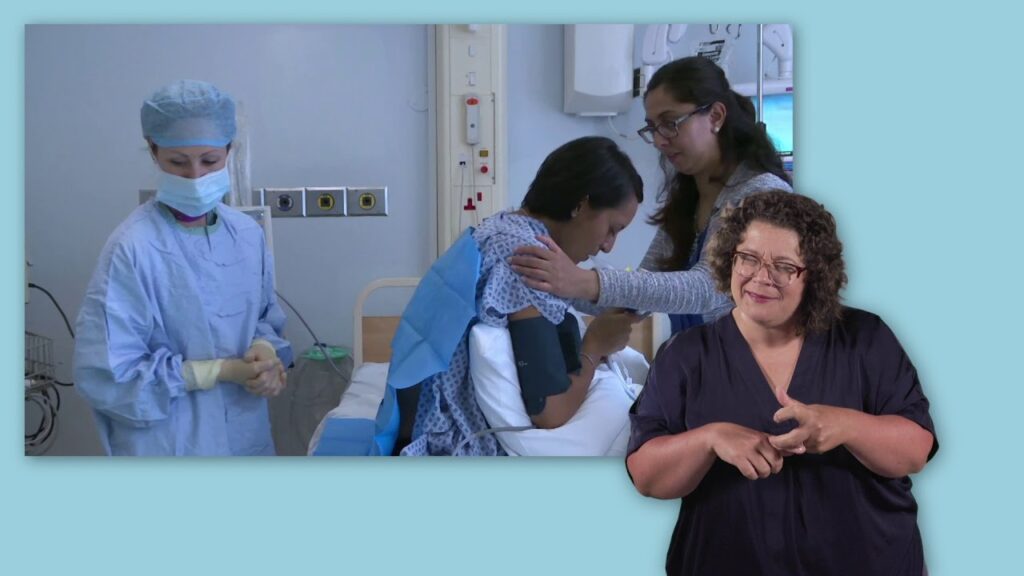
The sign for “labour” in BSL refers to the process of giving birth or the act of going into labour. It’s commonly used in discussions around pregnancy, childbirth, and maternal health within the UK Deaf community.
How to Sign “Labour” in BSL
- Start with your dominant hand in a fist shape, palm facing inwards.
- Position your fist just below your chest, approximately at the level of your ribs.
- Move your fist in a circular motion towards your body, representing the contraction aspect of labour.
- As you make this movement, use your facial expressions to convey intensity or discomfort, which are important non-manual features in BSL.
- Maintain eye contact with your audience to enhance engagement and understanding.
Common Mistakes
- Inconsistent hand shape: Some learners may forget to maintain a fist shape while signing.
- Not using facial expressions: Omitting facial cues can result in a lack of clarity about the emotional context of the sign.
- Improper hand movement: Failing to perform the circular motion can lead to confusion with other signs.
BSL vs ASL
In BSL, the sign for “labour” focuses on the physical motions associated with childbirth, while ASL uses a different handshape and movement that may not convey the same nuances. BSL incorporates more facial expressions to express feelings related to labour, which is less emphasized in ASL.
Related Signs
- Pregnancy – The sign for the state of being pregnant.
- Birth – The sign indicating the act of giving birth.
- Mother – The sign for referring to a mother or maternal figure.
- Child – The sign representing a young person or child.
- Health – The sign concerning health and wellbeing, often linked to childbirth discussions.
Frequently Asked Questions
How can I use “labour” in a BSL sentence?
You can say, “SHE GOING LABOUR,” where “SHE” is signed with a pointing gesture to the person in question, followed by the sign for “labour.”
Are there regional variations for this sign?
While the sign is generally consistent, some regions may have slight variations in movement or emphasis. Observing local signers can help.
What other signs are similar to “labour”?
Related signs include “pregnancy,” “birth,” and “mother,” which all connect to the themes of childbirth and maternal health.
What tips do you have for learning this sign?
Practice with a mirror to check your handshape and facial expressions. Watching videos of native signers can also be beneficial.
Is “labour” used in formal settings?
Yes, the sign is appropriate in both casual and formal discussions about childbirth in health settings.
Can I combine this sign with others?
Yes, you can combine “labour” with signs like “help” or “support” to express a complete thought, such as needing support during labour.
Practice ASL Signs
Use your camera to practice signs and get real-time AI feedback on your technique.
Free · No signup required