
I.d. in British Sign Language (BSL)

The sign for “I.D.” in British Sign Language (BSL) refers to identification, often used when discussing personal identification documents like passports or driving licenses. It’s commonly used in conversations about travel, security, or any situation where identification is required.
How to Sign “I.D.” in BSL
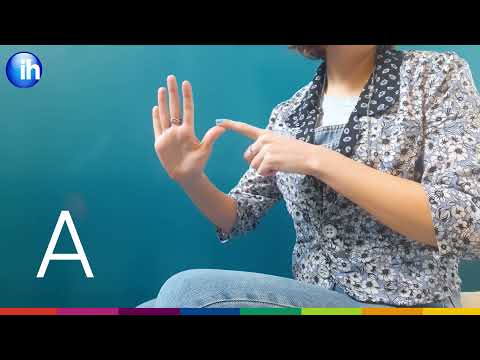
- Start with your dominant hand in a flat shape, fingers extended together (like a ‘B’ handshape).
- Position your hand in front of your chest, palm facing you.
- Move your hand slightly away from your body while maintaining the flat shape.
- As you perform the movement, raise your eyebrows to indicate that this is a topic (the “I.D.”) that you are discussing.
- Finish with a slight nod to affirm the concept of identification.
Common Mistakes
- Failing to use the correct handshape; some learners may use a fist instead of the flat hand.
- Not incorporating non-manual features, such as facial expressions, which are crucial for conveying meaning.
- Moving the hand too far away from the body, which can confuse the sign’s intent.
BSL vs ASL
In BSL, the sign for “I.D.” uses a flat hand shape and specific movements in front of the chest, whereas in American Sign Language (ASL), the sign may involve different hand shapes and movements. It’s essential to learn the correct sign for each language, as they can vary significantly.
Related Signs
- 1 – The sign for the number one in BSL.
- 1 Dollar – Signifying one dollar in BSL.
- 10 – The sign for the number ten in BSL.
- 100 – The sign for one hundred in BSL.
- 11 – The sign for eleven in BSL.
Frequently Asked Questions
How can I use “I.D.” in a BSL sentence?
You can say, “I NEED I.D.” by signing “I NEED” followed by the sign for “I.D.” Remember to use facial expressions to emphasize your need.
Are there regional variations for this sign in the UK?
The sign for “I.D.” is generally consistent across the UK, but some regions may have slight variations in movement or facial expressions.
What are some signs similar to “I.D.”?
Signs related to identification include “PASSPORT,” “LICENSE,” and “DOCUMENT.” Each has its unique sign in BSL.
What tips can help me learn this sign effectively?
Practice in front of a mirror to see your handshape and facial expressions. Watching videos of native signers can also be very helpful.
How does “I.D.” relate to other identification signs?
“I.D.” is a broader term, while signs like “PASSPORT” or “LICENSE” specify types of identification. You can use them together for clarity.
Can I use “I.D.” in a casual conversation?
Yes, “I.D.” is commonly used in both casual and formal conversations, especially when discussing identification needs.
Practice ASL Signs
Use your camera to practice signs and get real-time AI feedback on your technique.
Free · No signup required