
Facing in British Sign Language (BSL)

The sign “facing” in British Sign Language (BSL) is commonly used to describe the orientation of objects or people in relation to each other. It is particularly useful in conversations about positioning, directions, or when discussing visual perspectives. This sign helps clarify the context of a discussion, ensuring clear communication within the UK Deaf community.
How to Sign “Facing” in BSL
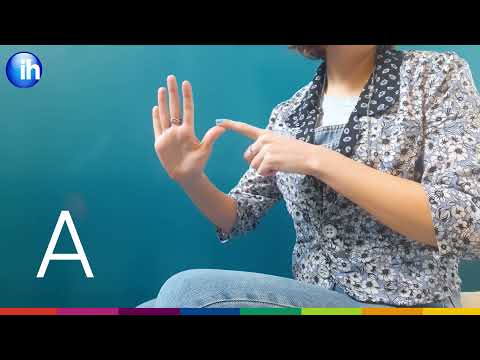
- Start with your dominant hand in a flat ‘B’ handshape (palm down).
- Position your hand at about waist level, facing towards your body.
- Move your hand slightly forward while rotating it to face outward, away from your body.
- Maintain a neutral facial expression or use a slight nod to indicate that you are affirming the action.
- Ensure your non-dominant hand stays relaxed at your side or can mirror the movement for emphasis.
Common Mistakes
- Not rotating the hand correctly, which may confuse the meaning of the sign.
- Using an incorrect handshape, such as a fist instead of the flat ‘B’ handshape.
- Forgetting to use facial expressions, which are crucial for conveying the correct tone and context in BSL.
BSL vs ASL
In American Sign Language (ASL), the sign for “facing” differs significantly in both handshape and movement. While BSL uses a ‘B’ handshape, ASL may use different configurations and often includes a more fluid motion. This highlights the distinct nature of each sign language, reflecting their unique grammar and cultural context.
Related Signs
- 1 – The sign for the number one.
- 10 – The sign for the number ten.
- 100 – The sign for the number one hundred.
- 11 – The sign for the number eleven.
- 12 – The sign for the number twelve.
Frequently Asked Questions
How do I use “facing” in a BSL sentence?
You can use “facing” to describe the direction someone is looking or the orientation of objects. For example, “The cat is facing the window” can be signed by incorporating the sign for “cat” and using “facing” to clarify its position.
Are there regional variations for this sign across the UK?
While the sign for “facing” is generally consistent, some regions may have slight variations in hand movements or facial expressions. It’s always good to learn from local Deaf community members.
Are there similar signs to “facing”?
Yes, signs like “looking” and “direction” may have overlapping meanings, but they convey different contexts. Practicing these will enhance your clarity in conversations.
What tips do you have for learning this sign?
Practice in front of a mirror to check your handshape and movement. Watching native BSL users can also help you grasp the nuances of the sign.
Can “facing” be used in different contexts?
Absolutely! “Facing” can describe both physical orientation and metaphorical contexts, such as facing challenges. The context will guide how you incorporate it into your conversation.
Why are facial expressions important in BSL?
Facial expressions in BSL provide essential context and emotional tone. They can change the meaning of a sign, making them crucial for effective communication.
Practice ASL Signs
Use your camera to practice signs and get real-time AI feedback on your technique.
Free · No signup required