
Different from American in British Sign Language (BSL)

The sign for “is British Sign Language different from American” is often used in conversations about the distinctions between BSL and ASL. This topic is particularly relevant for those exploring linguistic differences or for learners transitioning between the two sign languages.
How to Sign “Different From American” in BSL
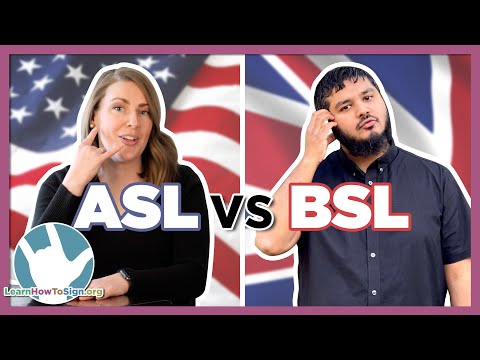
- Start with the topic: Hold your dominant hand in a flat ‘B’ shape (with fingers extended and together) in front of you, palm facing out. This represents “British Sign Language.”
- Position your non-dominant hand: Place your non-dominant hand in a similar ‘B’ shape but slightly lower and to the side. This hand will remain stationary.
- Express the difference: Move the dominant ‘B’ hand away from the non-dominant hand in a gentle arc to indicate “different.” This movement should be smooth and deliberate.
- Add non-manual features: Raise your eyebrows during the sign to indicate a question or curiosity about the difference. This facial expression is crucial to convey the intent of the sign.
- Finish with “American”: Bring your dominant hand back and form the ‘A’ handshape (a fist with the thumb on the side) to represent “American.” Position it next to the non-dominant hand.
Common Mistakes
- Forgetting to use facial expressions, which are essential in BSL to indicate the type of sentence (question, statement, etc.).
- Using a static position for the ‘B’ hand instead of the required movement to show the difference.
- Not positioning the hands correctly in relation to each other, which can lead to confusion about what is being signed.
BSL vs ASL
In BSL, the sign incorporates specific handshapes and movements that differ from ASL. While both languages address the concept of difference, the execution and associated grammar rules vary. For instance, ASL may use different handshapes or a completely different sign to convey the same meaning.
Related Signs
- (Bsl) – Refers to British Sign Language itself.
- 1 – The sign for the number one, useful in many contexts.
- 10 – Represents the number ten, often used in counting.
- 100 – Sign for one hundred, helpful in financial discussions.
- 15 – The sign for fifteen, commonly used in numerical contexts.
Frequently Asked Questions
Can I use this sign in a full sentence?
Yes! You can use this sign to start a question, such as “Is BSL different from ASL?” Just remember to incorporate the appropriate facial expressions.
Are there regional variations in how this sign is made?
Yes, some regions in the UK may have slight variations in hand movements or facial expressions, reflecting local dialects within BSL.
What signs are similar to this one?
Signs for “different,” “language,” and “American” have unique structures but can be related when discussing BSL and ASL differences.
What are some tips for learning this sign?
Practice in front of a mirror to refine your hand positions and facial expressions. Watching native signers can also help you grasp the nuances.
Is there a more formal version of this sign?
The sign itself is quite direct, but the context in which you use it can add formality, such as in educational settings or discussions.
How does space affect this sign?
Using space effectively helps illustrate the difference between BSL and ASL. Keeping your dominant hand moved away from the non-dominant one visually conveys the distinction.
Practice ASL Signs
Use your camera to practice signs and get real-time AI feedback on your technique.
Free · No signup required