
Chart in British Sign Language (BSL)

The sign for “British Sign Language chart” is used when discussing visual representations or diagrams related to BSL. This could include charts that illustrate grammar rules, vocabulary, or other educational materials. It’s a useful sign to know when navigating resources or teaching materials within the UK Deaf community.
How to Sign “Chart” in BSL
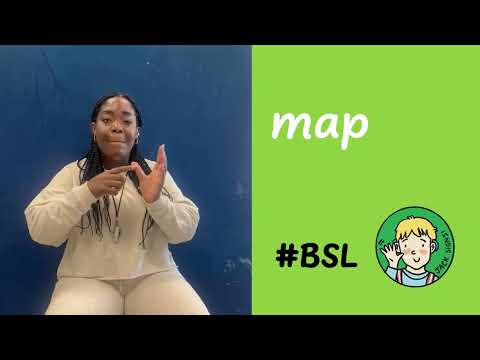
- Start with both hands open and facing down, fingers spread.
- Position your hands in front of you at about chest height.
- Move your hands apart horizontally while maintaining the open hand shape, as if you are expanding a chart.
- As you move your hands, use facial expressions to convey interest or emphasis; your eyebrows may raise slightly to indicate the importance of the chart.
- Bring your hands back together to show the concept of a chart being contained or focused.
Common Mistakes
- Forgetting to use non-manual features, which can make the sign less expressive.
- Using a closed fist instead of an open hand, which changes the meaning entirely.
- Not using enough space, leading to a lack of clarity in communication.
BSL vs ASL
In BSL, the sign for “chart” incorporates open hands and a sideward movement to indicate expansion. In contrast, ASL uses a different handshape and movement to convey a similar concept, demonstrating how signs can vary significantly between these two sign languages.
Related Signs
- BSL – The sign for British Sign Language itself.
- 1 – The sign for the number one.
- 100 – The sign for one hundred, useful in charts involving numbers.
- 10 – The sign for ten, often used in educational contexts.
- 12 – The sign for twelve, another useful number in various charts.
Frequently Asked Questions
How can I use “chart” in a BSL sentence?
You can say, “THIS (point to the chart) IS BSL CHART,” using the topic-comment structure.
Are there regional variations in how “chart” is signed?
While the sign is generally consistent, some regions may have slight variations in movement or facial expressions.
What are signs similar to “chart”?
Signs like “graph” or “diagram” may share similar handshapes but differ in movement and context.
Any tips for learning this sign?
Practice in front of a mirror to check your handshape and facial expressions. Watching native signers can also be helpful.
Can I use “chart” in a classroom setting?
Yes, this sign is very appropriate in educational settings when discussing resources or materials.
What is the importance of using facial expressions?
Facial expressions convey tone and context in BSL, adding depth to your communication.
Practice ASL Signs
Use your camera to practice signs and get real-time AI feedback on your technique.
Free · No signup required