
American and British in British Sign Language (BSL)

The sign for “American and British Sign Language” is often used in discussions about the differences and similarities between BSL and ASL. This sign is commonly seen in educational settings and among professionals who work to bridge communication between the two communities. Understanding this sign can help facilitate better conversations between Deaf individuals from different backgrounds.
How to Sign “American And British” in BSL
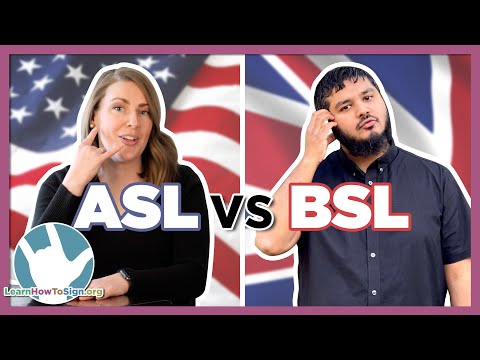
- Start with your dominant hand in a flat shape (palm facing down) to represent “American”. Position this hand slightly in front of your body, around chest height.
- Move your dominant hand to the right, tracing a short arc to represent the transition from “American” to “British”.
- Now change your hand shape to a flat hand (palm facing down) for “British”. Position it in front of your body on the left side, mirroring the initial position for “American”.
- To emphasise the difference between the two, you can use your non-dominant hand to hold a sign shape for either “American” or “British” while keeping the other hand in the respective position.
- Maintain a neutral facial expression throughout, but you can add slight nods to indicate the transition from one sign to the other.
Common Mistakes
- Some learners may forget to use the correct hand shapes, leading to confusion between the two signs.
- Not using enough space to differentiate the two signs can make it unclear which language is being referred to.
- Overlooking non-manual features, such as facial expressions, which can add clarity and emphasis to the signs.
BSL vs ASL
In BSL, the sign for “American and British” involves distinct hand shapes and movements that reflect the cultural aspects of each language. In ASL, the signs may differ significantly in handshape and motion, often using more fluid movements. Understanding these differences is key to effective communication between the two communities.
Related Signs
- (Bsl – Referring to British Sign Language.
- (Bsl) – Another variation for British Sign Language.
- 1 – The number one sign.
- 1 Dollar – Sign for one dollar.
- 10 – The number ten sign.
Frequently Asked Questions
How can I use this sign in a sentence?
You can say, “I am learning both American and British Sign Language” by signing “I learn American and British” with the respective signs.
Are there regional variations in BSL for this sign?
While the sign is generally consistent, slight variations may exist based on regional dialects within the UK.
What are some similar signs I should know?
Similar signs include “British Sign Language“, “American Sign Language”, and numbers like “1” and “10”.
What tips do you have for learning this sign?
Practice in front of a mirror to check your hand shapes and movements. Watching videos of native signers can also be very helpful.
Can I combine this sign with more information?
Yes, you can add more context by including signs related to your experiences, like “learn”, “use”, or “meet”.
How does the Deaf community view these two languages?
The Deaf community often appreciates the unique aspects of both languages and encourages learning about each for better communication.
Is there a specific context for using this sign?
This sign is often used in educational contexts, workshops, or discussions about Deaf culture and communication.
Practice ASL Signs
Use your camera to practice signs and get real-time AI feedback on your technique.
Free · No signup required