
Coffee in British Sign Language (BSL)

The sign for “coffee” is an essential part of daily conversation in the UK Deaf community, often used in social settings or when discussing preferences. This sign represents a warm beverage that many enjoy and serves as a great way to connect with others over a shared love of coffee.
How to Sign “Coffee” in BSL
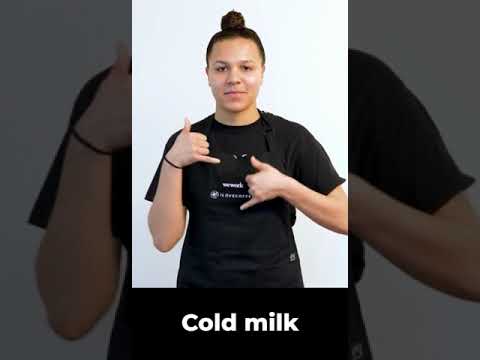
- Start with your dominant hand in a flat shape (like the letter ‘B’) with your fingers together.
- Position your dominant hand near your mouth, palm facing you, as if you are holding a cup.
- Bring your hand slightly towards your mouth, mimicking the action of bringing a cup to sip.
- Use a friendly facial expression, perhaps raising your eyebrows slightly to convey enjoyment.
Common Mistakes
- Forgetting to use non-manual features like facial expressions, which can change the meaning.
- Using a fist shape instead of a flat hand, which can confuse the sign with something else.
- Not properly positioning the sign at the mouth, which may make it unclear that it represents drinking coffee.
BSL vs ASL
In BSL, the sign for “coffee” involves a motion that suggests drinking from a cup, while in ASL, the sign is typically made using a different handshape and position. This highlights the unique nature of each sign language and the cultural context around them.
Related Signs
- Tea – The sign for a popular beverage, often compared to coffee.
- Drink – A general sign for consuming beverages.
- Milk – Another common drink sign.
- Cafe – Referring to a place where coffee and other drinks are served.
- Hot – Describing the temperature of beverages.
Frequently Asked Questions
Can I use this sign in a sentence?
Yes! For example, you can say “I want coffee” by signing “I” (point to yourself), followed by the sign for “want,” and then “coffee.”
Are there regional variations for the sign “coffee”?
While the sign is generally consistent across the UK, some regional variations may exist in handshape or movement.
What are some similar signs?
Related signs include tea and drink, which are often used in similar contexts.
What tips can help me learn this sign?
Practice regularly in front of a mirror, and try to incorporate it into daily conversations with friends.
How can I remember the sign for coffee?
Think of the action of bringing a cup to your mouth; associating the sign with the action can help reinforce memory.
Is there a specific context for using this sign?
This sign is commonly used in casual conversations, particularly in cafes or social gatherings where coffee is served.
Practice ASL Signs
Use your camera to practice signs and get real-time AI feedback on your technique.
Free · No signup required