
Zombi in Australian Sign Language (Auslan)
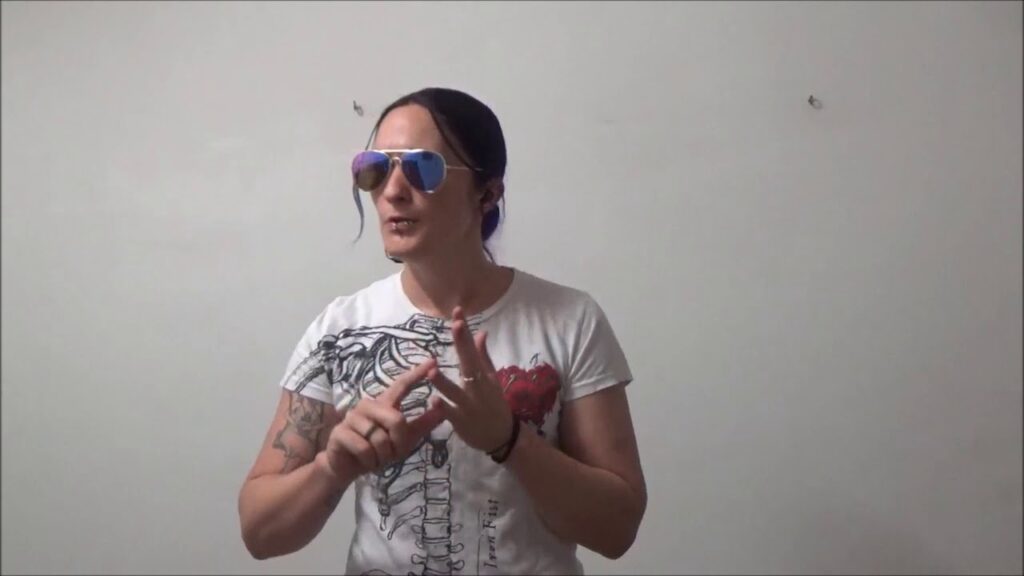
The sign for “zombi” in Auslan is used to describe the popular culture figure of a zombie, often seen in movies and literature. This sign is commonly used during conversations about horror genres, Halloween events, or when discussing themes related to the undead.
Table of Contents
How to Sign “Zombi”
- Start with your dominant hand in a bent ‘B’ shape. Your fingers should be extended and together, with the thumb resting against the palm.
- Position your hand near your forehead, with your palm facing away from your face.
- Move your hand forward and slightly downward in a small arc, as if you are mimicking a head lolling forward.
- As you perform the movement, adopt a facial expression that reflects a zombie-like demeanor—think vacant or slow-moving.
Common Mistakes
- Forgetting to use the appropriate facial expressions, which are essential for conveying the meaning of the sign.
- Using a flat hand instead of the bent ‘B’ handshape, which can lead to confusion with other signs.
- Rushing the hand movement, which may result in a less clear representation of the zombie concept.
Related Signs
- 1 – The sign for the number one.
- 10 – The sign for the number ten.
- 100 – The sign for the number one hundred.
- 15 – The sign for the number fifteen.
- 16 – The sign for the number sixteen.
Using “Zombi” in Everyday Conversations
The sign “Zombi” can be incorporated into various everyday conversations, especially when discussing movies, stories, or Halloween themes. Here are a few example sentences demonstrating how to use this sign naturally:
- “I love horror movies, especially Zombi films.” (SIGN: LOVE HORROR MOVIE ZOMBI)
- “Last Halloween, I dressed up as a Zombi.” (SIGN: LAST HALLOWEEN I DRESS ZOMBI)
- “Have you read that new book about Zombis?” (SIGN: HAVE YOU READ NEW BOOK ZOMBI)
These sentences can arise in casual conversations among friends or during themed discussions, allowing for the sign to flow naturally within the context of the topic.
Cultural Notes
In the Australian Deaf community, the concept of “Zombi” often reflects a playful engagement with horror culture, particularly around Halloween, which has gained popularity in recent years. The sign can evoke a sense of fun and creativity, especially in storytelling or performance contexts. It’s worth noting that while “Zombi” is widely understood, some regional dialect variations may exist across Australia. For instance, in more urban areas, the sign may be accompanied by additional non-manual signals to express enthusiasm or fear, enhancing the storytelling aspect. In contrast, rural communities may use a more straightforward approach, focusing on clarity in communication.
Tips for Learning This Sign
To effectively learn and remember the sign “Zombi,” consider these practical strategies:
- Mirror Practice: Use a mirror to practice the sign. This allows you to see your own hand shapes and movements, ensuring you replicate the sign accurately.
- Watch for Non-Manual Features: Pay attention to facial expressions and body language that accompany the sign. These non-manual features provide context and emotion, making your signing more expressive.
- Incorporate in Short Sentences: Create short, simple sentences that include “Zombi” and practice them regularly. This reinforces your memory and helps you use the sign in real-life situations.
By integrating these methods, you can enhance your signing skills and confidently use “Zombi” in conversations.
Frequently Asked Questions
How can I use “zombi” in a sentence?
You can sign “I saw a zombi movie last night” by incorporating the sign for “zombi” within the context of your sentence.
Are there regional variations for the sign “zombi”?
While the sign is generally consistent, some regions may have slight variations in hand movement or expression. It’s best to observe local signers.
What are some similar signs to “zombi”?
Related signs include “ghost,” “monster,” and “scary,” which can be used in similar contexts to describe supernatural beings.
How does “zombi” compare to BSL?
In BSL, the sign for “zombi” may differ in handshape and movement. It’s beneficial to study both languages to appreciate their unique characteristics.
What tips do you have for teaching this sign?
Encourage learners to focus on facial expressions and the fluidity of movement. Practicing in groups can help reinforce the sign’s meaning.
Practice This Sign
Try signing Zombi In Auslan with your camera and get AI coaching on your handshape, movement, and location.
Free · No signup required