
You Are Welcome in Australian Sign Language (Auslan)
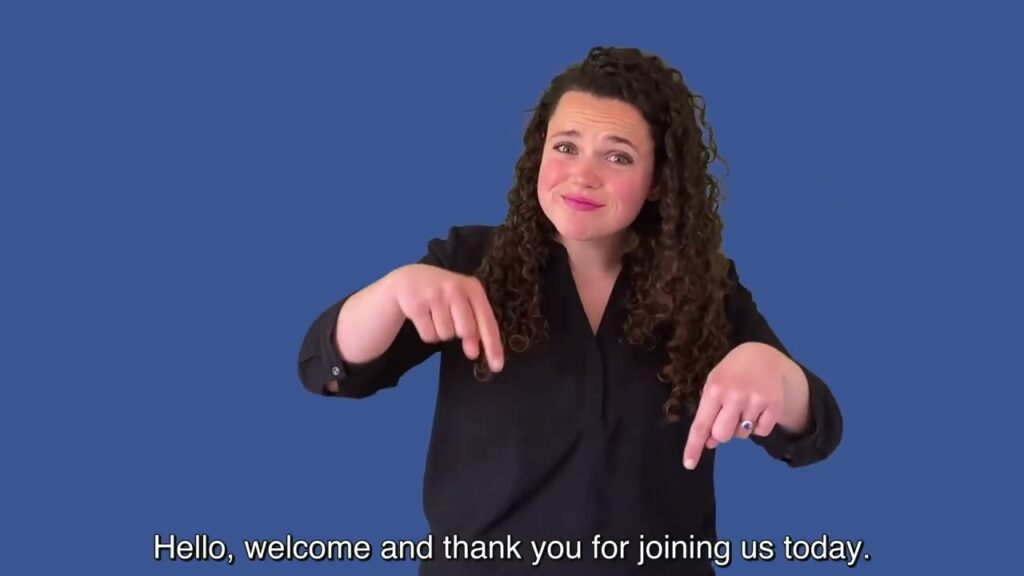
The sign for “you are welcome” is a warm and friendly gesture used to express hospitality and kindness. It’s commonly used after someone thanks you, letting them know that their gratitude is appreciated, and that they are always welcome. This sign fosters positive communication and reinforces community ties.
How to Sign “You Are Welcome In Auslan“

- Start with your dominant hand open, fingers together and palm facing up.
- Position your hand near your chin or mouth level, with your fingers pointing towards your body.
- Gently move your hand forward and slightly away from your face, while keeping your fingers together.
- As you make this motion, smile to convey warmth and friendliness, which enhances the meaning of the sign.
Common Mistakes
- Forgetting to smile can make the sign feel less welcoming. Always remember to express warmth with your facial expressions.
- Some learners may incorrectly use a closed fist instead of an open hand, which changes the meaning of the sign.
- Moving the hand too quickly can lead to misunderstanding; the movement should be smooth and gentle to convey the right feeling.
Related Signs
- 1 – The sign for the number one.
- 10 – The sign for the number ten.
- 100 – The sign for the number one hundred.
- 11 – The sign for the number eleven.
- 12 – The sign for the number twelve.
Frequently Asked Questions
How can I use “you are welcome” in a sentence?
You can use it after someone says “thank you.” For example, if a friend thanks you for helping them, you can sign “you are welcome” to acknowledge their gratitude.
Are there regional variations for this sign?
While the sign is generally consistent across different areas, subtle variations can exist based on individual or community preferences. Observing local signers can provide insight into these variations.
What are some signs similar to “you are welcome”?
Signs such as “thank you” and “please” are related in the context of politeness and communication. Learning these can enhance your interactions.
How does this compare to BSL?
The sign for “you are welcome” in British Sign Language (BSL) is different. It’s always helpful to learn the differences if you’re communicating with BSL users.
What are some tips for teaching this sign?
Encourage students to practice with facial expressions and gestures together. Using role-playing scenarios can help reinforce the sign’s usage in a friendly context.
Practice This Sign
Try signing You Are Welcome In Auslan with your camera and get AI coaching on your handshape, movement, and location.
Free · No signup required