
Yawn in Australian Sign Language (Auslan)
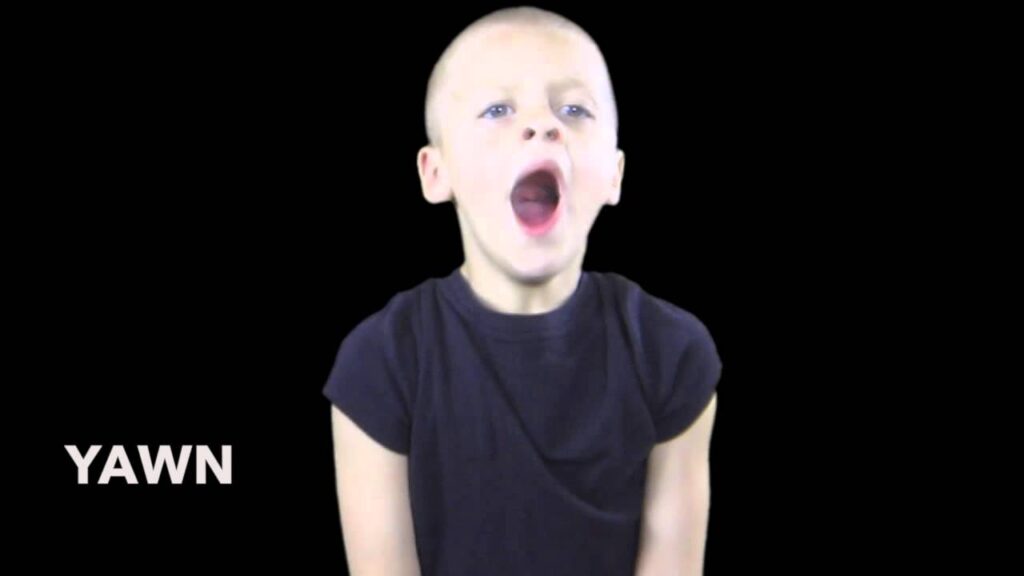
The sign for “yawn” in Auslan represents the action of yawning, which is often associated with tiredness or boredom. It’s a common sign used in everyday conversation, especially when discussing feelings of sleepiness or during casual interactions when someone might be feeling a bit drowsy. This sign can also play a role in storytelling or jokes related to being tired.
Table of Contents
How to Sign “Yawn”
- Start with your dominant hand in a flat handshape (like a ‘B’ handshape).
- Position your hand near your mouth, with your palm facing towards you.
- Open your mouth slightly to mimic the action of yawning.
- Move your hand away from your mouth in a downward motion, as if you’re expressing the yawn.
- Incorporate facial expressions that reflect tiredness, such as drooping eyelids or a relaxed face.
Common Mistakes
- Forgetting to use facial expressions, which are essential in conveying the meaning of the sign.
- Using an incorrect handshape; make sure to maintain the flat handshape throughout the sign.
- Not moving the hand away from the mouth, which can lead to confusion with other signs.
Related Signs
- 1 – The number one in Auslan.
- 1 Dollar – A sign for currency, indicating one dollar.
- 10 – The number ten in Auslan.
- 100 – The number one hundred in Auslan.
- 11 – The number eleven in Auslan.
Using “Yawn” in Everyday Conversations
The sign for “yawn” can be quite useful in everyday conversations, particularly when discussing feelings of tiredness or boredom. Here are a few example sentences that illustrate how to incorporate the sign naturally:
- I
YAWN because I stayed up late watching movies. - He
YAWN during the lecture; it was long and boring. - Do you
YAWN when you wake up early?
These examples can come up in casual chats among friends, family discussions about sleep habits, or even in classroom settings when students express their feelings about lessons.
Cultural Notes
In the Australian Deaf community, yawning is often associated with expressions of tiredness, boredom, or even a lack of interest in a topic. It can serve as a non-verbal cue to indicate that someone is disengaged or needs a break. Understanding the cultural context of this sign is important, as it reflects not only a physical action but also a social one. While there is generally no significant dialect variation in the sign for “yawn” between northern and southern Australia, some regional differences in facial expressions or accompanying gestures may occur, reflecting local signing styles.
Tips for Learning This Sign
Practicing the sign for “yawn” can be both fun and effective. Here are some concrete methods to help you remember and incorporate it into your signing:
- Mirror Practice: Stand in front of a mirror to practice the sign. This helps you ensure that your movements are clear and accurate, and it allows you to observe your facial expressions, which are crucial in Auslan.
- Observe Non-Manual Features: Pay attention to the facial expressions that accompany the sign. A slight frown or raised eyebrows can add meaning to your signing. Practice these features to enhance your communication.
- Use in Short Sentences: Create simple sentences that incorporate “yawn,” and practice them regularly. For instance, you might try signing, “I
YAWN in the morning” to connect the action with a specific context.
By regularly practicing these techniques, you’ll find it easier to remember and use the sign naturally in conversations!
Frequently Asked Questions
How can I use “yawn” in a sentence?
You might say, “I saw her yawn during the meeting,” which can be signed as, “SHE YAWN MEETING.”
Are there regional variations for this sign?
Is there a similar sign in BSL?
In BSL, the sign for “yawn” is somewhat different; it’s always good to learn the specific signs for each language.
What are some teaching tips for this sign?
Encourage learners to practice in front of a mirror to check their facial expressions and hand movements.
Can “yawn” be used in storytelling?
Absolutely! Using “yawn” can add a humorous or relatable element to a story about feeling tired or bored.
Practice This Sign
Try signing Yawn In Auslan with your camera and get AI coaching on your handshape, movement, and location.
Free · No signup required