
Y Branch in Australian Sign Language (Auslan)

The sign for “Y Branch” in Auslan represents the concept of a branching structure or a Y-shaped form. This sign is commonly used in discussions about trees, family trees, or any context where you might describe something that splits into two directions. It can also be a fun way to describe certain pathways or choices in life.
How to Sign “Y Branch”
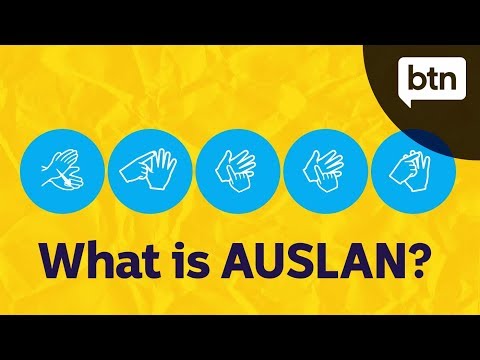
- Start with your dominant hand in the “Y” handshape. To form this, extend your pinky finger and thumb while keeping your other fingers curled inwards.
- Position your hand in front of your body, at about chest height, with your palm facing to the side.
- Move your hand slightly outward and then back toward your body to represent the branching action. This movement should be gentle, mimicking how branches extend from a tree.
- Maintain a relaxed facial expression that reflects the context of your discussion, whether it’s informative or light-hearted.
Common Mistakes
- Forgetting to use the correct handshape. Ensure you form a clear “Y” with your dominant hand.
- Using too much force in the hand movement, which can make the sign look abrupt instead of fluid.
- Positioning the hand too low or too high; aim for chest height to maintain clarity.
Related Signs
- 1 – The sign for the number one.
- 1 Dollar – A sign used for currency, specifically one dollar.
- 10 – The sign for the number ten.
- 100 – The sign for the number one hundred.
- 11 – The sign for the number eleven.
Frequently Asked Questions
How can I use “Y Branch” in a sentence?
You might say, “My family tree has a Y branch from my grandparents to my parents.” This emphasizes the branching nature of family relationships.
Are there regional variations for this sign?
While the core sign remains the same, some regions may have slight variations in movement or hand positioning. It’s always good to observe local usage.
Are there similar signs to “Y Branch”?
Yes, signs that depict branching or splitting concepts, such as “fork” or “tree,” may look similar but have different handshapes and movements.
How does this compare to BSL?
In British Sign Language (BSL), the sign may differ significantly. It’s beneficial to learn the specific signs for each language to avoid confusion.
What teaching tips can help with this sign?
Practice in front of a mirror to ensure you’re using the correct handshape and positioning. Watching video demonstrations can also greatly enhance understanding.
Practice This Sign
Try signing Y Branch In Auslan with your camera and get AI coaching on your handshape, movement, and location.
Free · No signup required