
Salad in Australian Sign Language (Auslan)

The sign for “salad” in Auslan represents a popular dish made primarily from various vegetables, often enjoyed as a side or main meal. This sign is commonly used in conversations about food, especially during meal planning or sharing recipes.
Table of Contents
How to Sign “Salad”
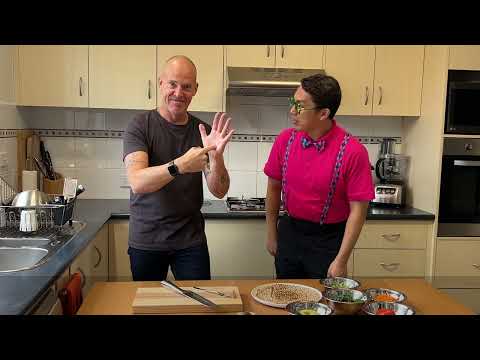
- Start with both hands in a flat “B” shape (palms facing down).
- Position your hands about shoulder-width apart, with fingers slightly apart and parallel to each other.
- Move both hands in a circular motion, as if mixing ingredients in a bowl.
- Maintain a relaxed facial expression, showing enjoyment or satisfaction, to convey the idea of food.
Common Mistakes
- Forgetting to use both hands, which can make the sign less clear.
- Making the circular motion too small, making it look like a different sign.
- Using a tense facial expression instead of a relaxed one, which can affect the meaning of the sign.
Related Signs
- 1 – The number one in ASL.
- 1 Dollar – A sign for currency value.
- 10 – The number ten in ASL.
- 100 – The number one hundred in ASL.
- 11 – The number eleven in ASL.
Using “Salad” in Everyday Conversations
The sign for “salad” often comes up in everyday conversations, especially during meal planning or discussions about healthy eating. Here are some example sentences to illustrate how you can incorporate this sign into your Auslan communication:
- “I made a salad for lunch.” (ME – SALAD – MAKE – LUNCH)
- “Do you want salad with your dinner?” (YOU – WANT – DINNER – SALAD)
- “We should try the new salad place.” (WE – SHOULD – TRY – NEW – SALAD – PLACE)
These examples demonstrate how the sign “salad” fits naturally into conversations about food and dining experiences, making it a practical addition to your Auslan vocabulary.
Cultural Notes
In the Australian Deaf community, food plays an important role in social gatherings and cultural events. Sharing meals, including salads, fosters connection and community bonding. The sign for “salad” may also be influenced by local variations within different regions of Australia. For instance, in some northern areas, there might be slight differences in how the sign is articulated compared to southern regions. These variations reflect the diversity of the Deaf community and the importance of local culture in sign language.
Tips for Learning This Sign
To effectively learn and remember the sign for “salad,” consider these practical tips:
- Mirror Practice: Stand in front of a mirror while practicing the sign. This helps you see your own handshape and movement, ensuring accuracy.
- Observe Non-Manual Features: Pay attention to facial expressions and body language when signing. These non-manual features can add context and emotion to your signs.
- Use in Sentences: Incorporate “salad” into short sentences as part of your daily practice. This helps reinforce the sign and makes it easier to recall when needed.
By actively engaging with the sign in different contexts, you’ll find it easier to remember and use “salad” confidently in conversations.
Frequently Asked Questions
How can I use “salad” in a sentence?
You can say, “I love salad,” by signing “I” (point to yourself), then perform the salad sign.
Are there regional variations for the sign “salad”?
While the sign is generally the same, some regions may have slight variations in hand shape or movement, so it’s good to learn from local signers.
What are some similar signs to “salad”?
Similar signs include “vegetable” and “food,” which can be used in related discussions about meals.
How does “salad” compare to British Sign Language (BSL)?
The sign for “salad” in BSL may differ significantly, and it’s best to learn each language’s unique signs.
Any tips for teaching the sign “salad”?
Encourage students to practice with real ingredients or pictures of salads to reinforce the meaning and context of the sign.
Practice This Sign
Try signing Salad In Auslan with your camera and get AI coaching on your handshape, movement, and location.
Free · No signup required