
Painful in Australian Sign Language (Auslan)
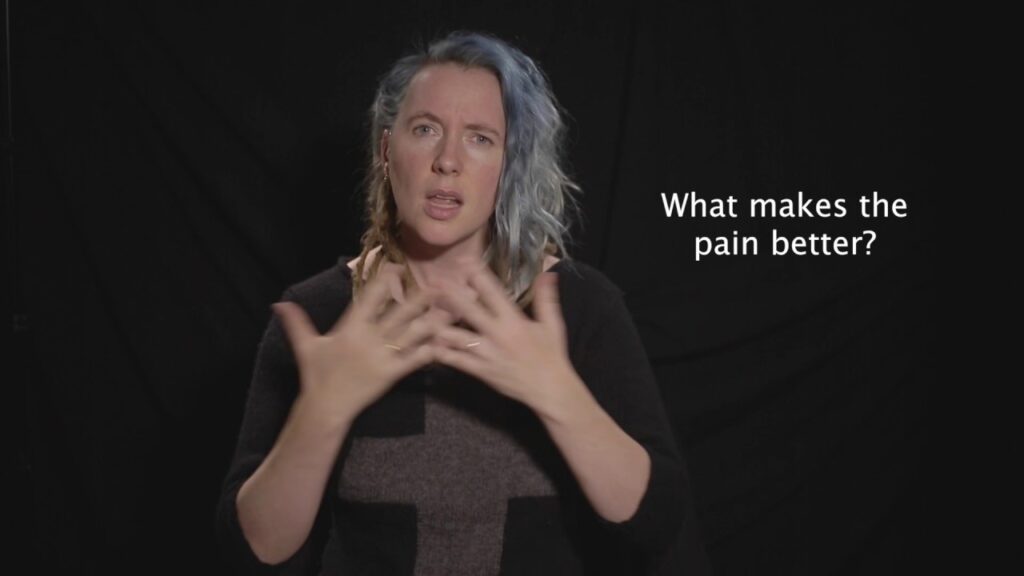
The sign for “painful” in Auslan is used to express feelings of discomfort or hurt. It is commonly used in medical settings, personal conversations, or when discussing injuries. This sign helps convey the intensity of physical sensations clearly.
Table of Contents
How to Sign “Painful”

- Start with your dominant hand in a fist shape, with your thumb wrapped around the outside.
- Position your fist near your chest, with the back of your hand facing outward.
- Gently move your fist forward and slightly downward, while maintaining the same shape.
- As you sign, furrow your brow or make a pained expression, which adds emotional context to the sign.
Common Mistakes
- Starting with fingers extended instead of in a fist shape.
- Moving the hand too quickly, which can make the sign unclear.
- Not using facial expressions, which are crucial for conveying intensity and emotion.
Related Signs
- 1 – The sign for the number one.
- 10 – The sign for the number ten.
- 100 – The sign for the number one hundred.
- 12 – The sign for the number twelve.
- 14 – The sign for the number fourteen.
Using “Painful” in Everyday Conversations
In everyday conversations, the sign “Painful” can be used in various contexts to express discomfort or distress. Here are a few example sentences that demonstrate how to incorporate this sign naturally:
- “My head is painful.” (Headache context) – When discussing health issues with friends or family, this sign can help convey the severity of your discomfort.
- “That was a painful experience.” (Emotional context) – During conversations about past events or experiences, using “Painful” can express emotional distress, allowing for deeper discussions.
- “The injection was painful.” (Medical context) – When sharing experiences at a doctor’s visit, this sign helps illustrate the physical pain associated with medical procedures.
Cultural Notes
In the Australian Deaf community, the sign “Painful” carries not just a literal meaning but also an emotional weight. Many Deaf individuals use this sign to communicate both physical and emotional pain, reflecting a broader understanding of health and well-being. Within the community, there can be variations in the sign depending on regional dialects, with some Northern and Southern communities showing slight differences in movement or facial expression. This highlights the rich diversity in Auslan and the importance of being aware of local variations when interacting with different groups.
Tips for Learning This Sign
Practicing the sign “Painful” effectively can enhance your fluency in Auslan. Here are some practical tips to help you remember and correctly use the sign:
- Mirror Practice: Stand in front of a mirror while practicing the sign. This allows you to observe your handshape and facial expressions, ensuring they align with the sign’s meaning.
- Focus on Non-Manual Features: Pay attention to your facial expressions when signing “Painful.” A furrowed brow or a grimace can enhance the emotional weight of the sign.
- Incorporate in Sentences: Use “Painful” in short signed sentences during practice. For example, create sentences about your daily experiences or share stories with friends to make it more engaging.
By using these methods, you’ll build confidence and improve your Auslan communication skills!
Frequently Asked Questions
How can I use “painful” in a sentence?
You can say, “My head is painful” by signing “HEAD” followed by “PAINFUL.”
Are there regional variations for this sign?
Some regions may have slight variations in movement or facial expressions, but the basic sign remains similar.
What are some signs similar to “painful”?
Signs like “hurt” and “ache” might be used interchangeably in certain contexts, depending on the intensity of the pain.
How does this sign compare to BSL?
The sign for “painful” in BSL is different; it typically involves a more straightforward gesture without the facial expressions.
What tips do you have for teaching this sign?
Encourage students to practice in front of a mirror to ensure they are using the correct facial expressions and hand shapes.
Practice This Sign
Try signing Painful In Auslan with your camera and get AI coaching on your handshape, movement, and location.
Free · No signup required