
Odd in Australian Sign Language (Auslan)

The sign for “odd” in Auslan refers to something that is unusual or not typical. It’s often used in conversations to describe numbers, behaviors, or situations that stand out as different. You’ll find this sign handy when discussing anything that deviates from the norm.
Table of Contents
How to Sign “Odd”
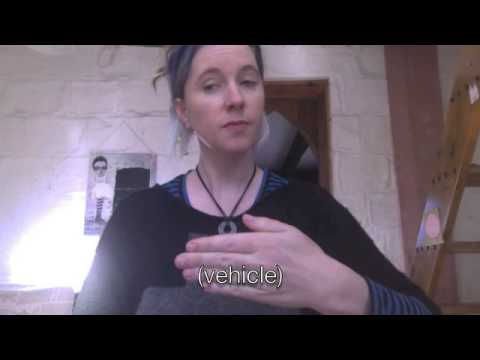
- Start with your dominant hand open (fingers spread) and palm facing towards you.
- Position your hand in front of your body, at about chest height.
- Bend your elbow, bringing your hand towards your shoulder, while maintaining the open hand shape.
- As you move your hand towards your shoulder, slightly twist your wrist so that your palm faces outward at the end of the movement.
- For facial expression, raise your eyebrows slightly to indicate curiosity or surprise, as this enhances the meaning of “odd.”
Common Mistakes
- Forgetting to use facial expressions, which are crucial in Auslan to convey emotions and nuances.
- Using a closed fist instead of an open hand, which can change the meaning of the sign.
- Rushing the movement; the sign should be smooth and deliberate to convey clarity.
Related Signs
- 1 – The sign for the number one, often used in various contexts.
- 10 – The sign for the number ten, useful in counting and discussions of quantity.
- 100 – Represents the number one hundred, frequently used in financial contexts.
- 11 – The sign for the number eleven, helpful in a variety of counting scenarios.
- 12 – The sign for the number twelve, often used when discussing age or time.
Using “Odd” in Everyday Conversations
The sign “Odd” can be used in various everyday conversations, often to describe something unusual or unexpected. Here are a few example sentences where this sign might naturally come up:
- Friend 1: “Did you see the movie?”
Friend 2: “Yes, it was odd!” - Person A: “I met someone who collects rocks!”
Person B: “That’s odd!” - Child: “Why is that cat wearing a sweater?”
Parent: “That’s odd, isn’t it?”
In these situations, the sign “Odd” clearly conveys surprise or disbelief, making it a useful expression in casual conversations.
Cultural Notes
The sign “Odd” holds significance within the Australian Deaf community, reflecting not only the meaning but also the cultural nuances of how Deaf people perceive the world. In social interactions, describing something as “odd” can evoke a shared understanding and a sense of humor among members of the community. Additionally, there may be slight variations in the sign or its usage between northern and southern dialects in Auslan. For instance, in some northern regions, the sign might be produced with a more exaggerated facial expression, while southern users may focus more on the handshape and movement. These variations enrich the language and highlight the diversity within the community.
Tips for Learning This Sign
Practicing the sign “Odd” can be made easier with a few concrete techniques:
- Mirror Practice: Use a mirror to watch your hand movements and facial expressions as you practice the sign. This helps ensure accuracy and expression.
- Observe Non-Manual Features: Pay attention to your facial expressions while signing “Odd.” These features can add depth to your communication and convey your feelings more effectively.
- Use in Short Sentences: Incorporate “Odd” into short signed sentences in your daily conversations. This reinforces your memory of the sign and helps you become more comfortable using it contextually.
Regular practice and contextual use will enhance your fluency and confidence when signing “Odd” in various situations.
Frequently Asked Questions
Can you use “odd” in a sentence?
Yes! You might say, “That number is odd,” while signing the relevant number and using the sign for “odd.”
Are there regional variations for this sign?
While the sign for “odd” is generally consistent, some regions may have slight variations in movement or facial expression.
What are some similar signs to “odd”?
Signs like “weird” or “strange” convey similar meanings, and you can use them in different contexts.
How does this compare to BSL?
In British Sign Language (BSL), the sign for “odd” may look different, emphasizing the uniqueness of each sign language.
What are some teaching tips for this sign?
Practice in front of a mirror to ensure your handshape and facial expressions are clear. Group practice can also help reinforce the sign.
Practice This Sign
Try signing Odd In Auslan with your camera and get AI coaching on your handshape, movement, and location.
Free · No signup required