
Jinx in Australian Sign Language (Auslan)

The sign for “jinx” in Auslan is often used in playful or light-hearted contexts, particularly when someone has said the same word or phrase simultaneously as another person. It’s a fun way to acknowledge the coincidence and can lead to laughter or a playful interaction between friends.
Table of Contents
How to Sign “Jinx”
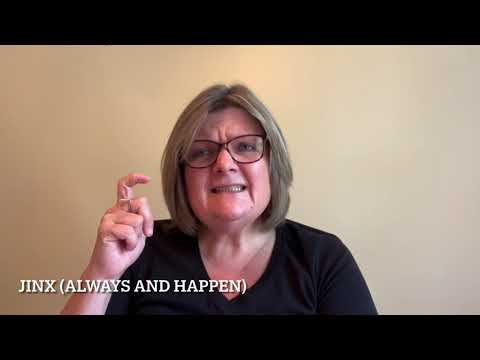
- Start with both hands in a “B” handshape (flat, palm facing down).
- Position your hands close together, about chest level.
- Quickly move both hands outward and slightly apart while maintaining the “B” handshape.
- Simultaneously, raise your eyebrows and give a playful expression to emphasize the fun of the moment.
Common Mistakes
- Forgetting to use the “B” handshape, which can lead to confusion with other signs.
- Not using facial expressions, which are crucial in Auslan to convey the playful context of the sign.
- Making the movement too slow; the sign should be quick and light-hearted to match the jinx concept.
Related Signs
- 1 – The sign for the number one.
- 1 Dollar – The sign used for indicating one dollar.
- 10 – The sign for the number ten.
- 100 – The sign for the number one hundred.
- 11 – The sign for the number eleven.
Using “Jinx” in Everyday Conversations
The sign for “Jinx” can add a playful element to conversations among friends, especially when sharing light-hearted moments. Here are a few example sentences where this sign fits naturally:
- Friend 1: “I just said the same thing as you!” Friend 2: “Jinx!”
- During a game night, a player says: “If we both pick the same card, it’s a jinx!”
- In a conversation about superstitions: “When someone says ‘jinx’, it’s like they’re claiming something special has happened.”
These situations highlight how “Jinx” can be used in a fun, social context, helping to strengthen connections within conversations.
Cultural Notes
In the Australian Deaf community, the sign for “Jinx” carries a playful connotation and is often used in a light-hearted manner. It reflects a shared understanding of the playful nature of language and communication within the community. The concept of jinxing someone is familiar to many, making it a fun sign to use among peers. While there is no significant northern or southern dialect variation for this sign, regional differences in how humor is expressed in Auslan may influence how often or in what contexts “Jinx” is used. Generally, it is embraced in casual settings, reflecting the friendly and sociable nature of Deaf culture across Australia.
Tips for Learning This Sign
To effectively learn and remember the sign for “Jinx,” consider the following tips:
- Mirror Practice: Stand in front of a mirror and practice signing “Jinx” while watching your movements. This helps in mastering the handshape and positioning.
- Watch for Non-Manual Features: Pay attention to facial expressions and body language when using the sign. These non-manual features add meaning and context.
- Use It in Short Sentences: Incorporate “Jinx” into various short signed sentences during conversations with friends or family members. This reinforces your learning and helps you become more comfortable with its use.
By practicing regularly, you can confidently incorporate “Jinx” into your Auslan vocabulary.
Frequently Asked Questions
Can I use “jinx” in a sentence?
Absolutely! You can say, “We both said ‘hello’ at the same time, jinx!”
Are there regional variations of this sign?
Yes, some regions may have slight variations in the movement or handshape, but the general concept remains the same.
What are some similar signs?
Signs like “oops” or “whoops” can convey similar playful meanings in different contexts.
How does this compare to British Sign Language (BSL)?
In BSL, the sign for “jinx” may differ, as signs can vary significantly between Auslan and BSL.
What tips do you have for teaching this sign?
Encourage students to practice with a partner to create a playful environment, making it easier to grasp the concept.
Is this sign used by all Deaf communities?
While many Deaf individuals understand and use this sign, it’s always best to check local preferences.
Practice This Sign
Try signing Jinx In Auslan with your camera and get AI coaching on your handshape, movement, and location.
Free · No signup required