
Necklace in Australian Sign Language (Auslan)

The sign for “necklace” in Auslan is used to describe the decorative piece worn around the neck. It can be used in various contexts, such as talking about gifts, fashion, or personal style. This sign is a great addition to conversations about jewelry and personal accessories.
Table of Contents
How to Sign “Necklace”
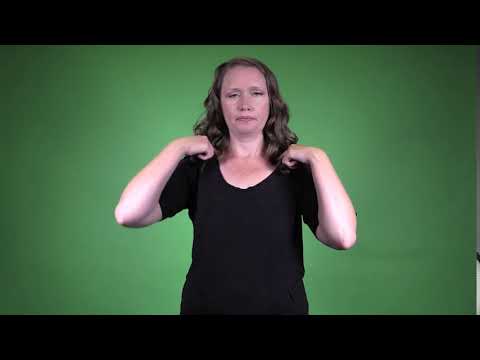
- Start with your dominant hand in a flat handshape, fingers extended and together.
- Position your hand near your chest, with your palm facing down.
- Move your hand in a circular motion away from your body, as if you are tracing the outline of a necklace around your neck.
- As you complete the circle, bring your hand back to the starting position at your chest.
- Maintain a friendly facial expression to convey enthusiasm about the necklace.
Common Mistakes
- Some learners may forget to use a circular motion, making the sign look more like a straight line.
- Not positioning the hand correctly near the chest can lead to confusion about the sign’s meaning.
- Over-exaggerating the movement can make the sign look awkward instead of fluid.
Related Signs
- 1 – Sign for the number one.
- 1 Dollar – Sign for one dollar, often used in shopping contexts.
- 10 – Sign for the number ten.
- 100 – Sign for the number one hundred.
- 11 – Sign for the number eleven.
Using “Necklace” in Everyday Conversations
Incorporating the sign for “necklace” into your conversations makes interactions more natural and engaging. Here are a few example sentences where this sign comes into play:
- “I love your necklace!” (YOU SIGN LOVE YOUR NECKLACE)
- “She bought a beautiful necklace for her birthday.” (SHE BUY BEAUTIFUL NECKLACE FOR HER BIRTHDAY)
- “My grandmother gave me her old necklace.” (MY GRANDMOTHER GIVE ME OLD NECKLACE)
These sentences can arise in various settings, such as complimenting a friend’s jewelry, discussing gifts, or sharing family stories. Using the sign in relatable contexts helps strengthen your Auslan fluency.
Cultural Notes
The sign for “necklace” holds significance within the Australian Deaf community, not only as a representation of jewelry but also as a reflection of personal identity and expression. Many Deaf individuals use jewelry, like necklaces, as a means to showcase their style and cultural pride. In some cases, specific necklaces may carry sentimental value, such as gifts from family or friends, symbolizing connections and shared experiences.
When it comes to dialect variations, there can be subtle differences in how signs are performed across different regions in Australia. While the sign for “necklace” is generally consistent, it’s always beneficial to observe local signing styles to enhance communication. Engaging with community members can provide valuable insight into these variations.
Tips for Learning This Sign
Mastering the sign for “necklace” can be enjoyable and effective with a few practice techniques:
- Mirror Practice: Stand in front of a mirror and practice the sign. This helps you see your handshape and movement, making it easier to refine your technique.
- Pay Attention to Non-Manual Features: Observe facial expressions and body language while signing. These features add context and emotion to your communication.
- Use in Short Signed Sentences: Incorporate “necklace” into daily conversations or storytelling. Practicing in context helps reinforce memory and builds confidence.
By consistently practicing these strategies, you’ll find that the sign for “necklace” becomes second nature, enhancing your overall Auslan skills.
Frequently Asked Questions
How can I use “necklace” in a sentence?
You can say, “I love your necklace!” by signing ‘I’ (point to yourself), ‘love’ (cross arms over your chest), and then ‘necklace.’
Are there regional variations for this sign?
What are some similar signs to “necklace”?
Similar signs include ‘jewelry’, ‘bracelet’, and ‘earrings’, which also focus on decorative items worn on the body.
How does this sign compare to BSL?
In BSL (British Sign Language), the sign for necklace may look different. It’s best to learn each sign language independently to appreciate their unique aspects.
What tips do you have for teaching this sign?
Encourage learners to practice in front of a mirror to perfect their hand shape and movement, and to use facial expressions that match the context.
Practice This Sign
Try signing Necklace In Auslan with your camera and get AI coaching on your handshape, movement, and location.
Free · No signup required