
Lamp in Australian Sign Language (Auslan)

The sign for “lamp” in Auslan represents the common household item used for lighting. It’s often used in conversations about home decor, lighting options, or when describing different types of lamps. This sign can be helpful in both casual and more detailed discussions about interior design.
Table of Contents
How to Sign “Lamp”
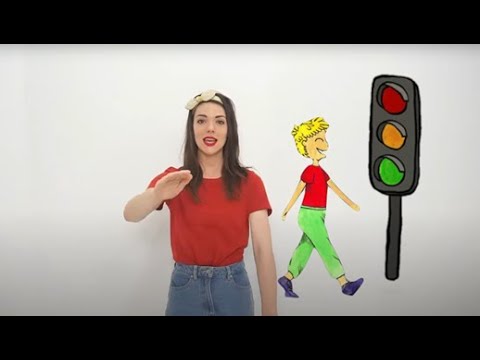
- Start with your dominant hand in a flat handshape (like the letter “B”).
- Position your dominant hand in front of your body at about chest height.
- With your palm facing down, move your hand upward in a slight arc, mimicking the shape of a lamp.
- As you move your hand, slightly tilt your head and raise your eyebrows to convey interest or emphasis.
Common Mistakes
- Forgetting to use the correct handshape, which can lead to confusion with other signs.
- Moving the hand too fast or in the wrong direction, which can make the sign unclear.
- Not incorporating appropriate facial expressions, which are important in Auslan for conveying meaning.
Related Signs
- Light – Refers to illumination, often used in contexts discussing brightness.
- Ceiling Light – Specifically refers to lights that are mounted on the ceiling.
- Table Lamp – A more specific sign for lamps that sit on tables or desks.
- Lamp Post – Refers to street or outdoor lamps.
- Lightbulb – The component often found in lamps that produces the light.
Using “Lamp” in Everyday Conversations
The sign for “Lamp” can easily fit into various conversational contexts. Here are a few examples:
- Example 1: “I bought a new lamp for my living room.”
Auslan Sign Order: “I NEW LAMP BUY LIVING ROOM.” This might come up when discussing home decor or shopping experiences. - Example 2: “Can you turn off the lamp, please?”
Auslan Sign Order: “YOU LAMP TURN OFF PLEASE.” This situation often arises in everyday interactions, especially in shared living spaces. - Example 3: “The lamp is too bright.”
Auslan Sign Order: “LAMP TOO BRIGHT.” This could occur during conversations about comfort in lighting when reading or watching TV.
Cultural Notes
The sign for “Lamp” holds significance in the Australian Deaf community, not just as a vocabulary term, but as part of a larger narrative about home and comfort. Lighting is often a topic of conversation during gatherings, as many Deaf individuals appreciate well-lit environments for visual clarity. Additionally, there can be slight variations in signing depending on regional dialects within Australia. For instance, some Deaf individuals from southern states might sign “Lamp” with a slight twist of the wrist, while those from northern areas may use a more straightforward motion. Acknowledging these variations can enhance communication and foster a deeper connection within the community.
Tips for Learning This Sign
Learning the sign for “Lamp” can be fun and engaging! Here are some practical tips:
- Mirror Practice: Stand in front of a mirror and practice the sign. This helps you see your handshape and movement, ensuring accuracy.
- Focus on Non-Manual Features: Pay attention to facial expressions and body language while signing. This adds context and emotion to your communication.
- Incorporate it into Sentences: Create short signed sentences using “Lamp.” This helps reinforce the sign’s meaning and usage in context. For example, practice asking others about their favorite lamp or discussing lighting preferences.
Regular practice in real conversations will solidify your understanding and fluency with the sign.
Frequently Asked Questions
How would I use “lamp” in a sentence?
You can say, “I bought a new lamp for my living room” by signing “I buy new lamp living room.”
Are there regional variations for the sign “lamp”?
Yes, some regions may have slight variations in the hand shape or movement, so it’s good to observe local signers.
What are some similar signs to “lamp”?
Signs like “light” and “ceiling light” can be similar, but each has its own distinct handshape and motion.
How does “lamp” compare to the BSL sign?
In BSL, the sign for “lamp” may use different hand shapes and movements, reflecting the unique characteristics of the language.
What are some teaching tips for the sign “lamp”?
Encourage learners to practice in front of a mirror to ensure proper handshape and facial expressions.
Practice This Sign
Try signing Lamp In Auslan with your camera and get AI coaching on your handshape, movement, and location.
Free · No signup required