
Faint in Australian Sign Language (Auslan)

The sign for “faint” in Auslan is used to describe the feeling of dizziness or the experience of losing consciousness temporarily. It’s often employed in discussions about health, personal experiences, or storytelling to convey moments of surprise or overwhelming sensations.
Table of Contents
How to Sign “Faint”
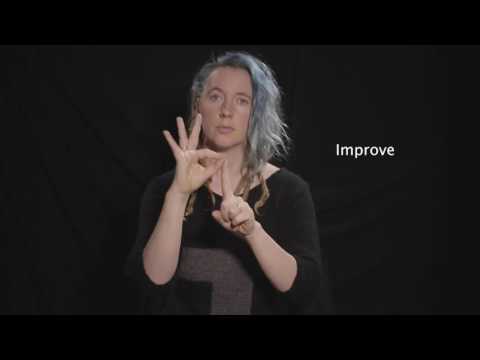
- Start with your dominant hand in a flat, open handshape (similar to the ASL “B” handshape).
- Position your hand at chest level, palm facing down.
- Slowly move your hand downward in a gentle, sweeping motion while simultaneously tilting your head slightly to the side as if you’re about to faint.
- As you perform this motion, add a facial expression that conveys surprise or dizziness, emphasizing the action.
Common Mistakes
- Some learners might not use the appropriate facial expressions, which are critical in conveying the emotional context of the sign.
- Others may rush the movement; the sign should be performed slowly to reflect the natural feeling of fainting.
- Forgetting to tilt the head slightly can lead to a misunderstanding of the intended meaning.
Related Signs
- 1 – The sign for the number one.
- 1 Dollar – Signifying one dollar in a financial context.
- 10 – The sign for the number ten.
- 100 – Representing one hundred in various discussions.
- 11 – The sign for eleven.
Using “Faint” in Everyday Conversations
Integrating the sign “Faint” into your everyday conversations can enhance your communication and make your signing more expressive. Here are a few example sentences where “Faint” might come up naturally:
- “I saw her faint at the concert.”
This might be used when recounting a story about a friend who lost consciousness during a loud or crowded event.
- “He fainted because he was dehydrated.”
This sentence could arise in a discussion about health and wellness, especially in hot weather or after physical activity.
- “Don’t be scared; I won’t faint!”
This is perfect for reassuring someone during a tense situation, such as a medical appointment or while giving a speech.
Cultural Notes
The sign “Faint” holds cultural significance in the Australian Deaf community, particularly regarding shared experiences and storytelling. Deaf individuals often recount personal narratives about fainting, whether due to excitement, anxiety, or health issues. This sign can express not only the physical act of fainting but also the emotional responses tied to such experiences.
In terms of dialect variation, while the sign for “Faint” is generally consistent throughout Australia, there may be subtle differences in non-manual features or facial expressions between northern and southern regions. Observing and engaging with local Deaf communities can help you understand these nuances better.
Tips for Learning This Sign
Practicing the sign “Faint” effectively involves a few simple techniques:
- Mirror Practice:
Use a mirror to practice the sign. This allows you to see your own movements and ensure that they align with the correct formation.
- Focus on Non-Manual Features:
Pay attention to your facial expressions and body language when signing “Faint.” Facial expressions can convey additional meaning and emotional context, making your signing more engaging.
- Incorporate into Short Signed Sentences:
Try using “Faint” in different sentences or scenarios. This helps reinforce your memory and makes the sign feel more natural in conversation.
By consistently practicing these strategies, you’ll become more comfortable and confident in using the sign “Faint” in your everyday interactions.
Frequently Asked Questions
How would I use “faint” in a sentence?
You can say, “I felt faint after running,” using the sign to emphasize the feeling.
Are there regional variations of this sign?
Yes, some regions may have slight variations in handshape or movement, so it’s helpful to observe local users.
What are some signs similar to “faint”?
Signs such as “dizzy” or “sick” might have overlapping meanings, so it’s useful to learn them for context.
How does this sign compare to BSL?
The BSL sign for “faint” may differ in handshape and movement, showcasing the diversity between signed languages.
What tips can you give for teaching this sign?
Emphasize the importance of facial expressions and practice the movement slowly to capture the feeling of fainting.
Practice This Sign
Try signing Faint In Auslan with your camera and get AI coaching on your handshape, movement, and location.
Free · No signup required