
Face Mask in Australian Sign Language (Auslan)
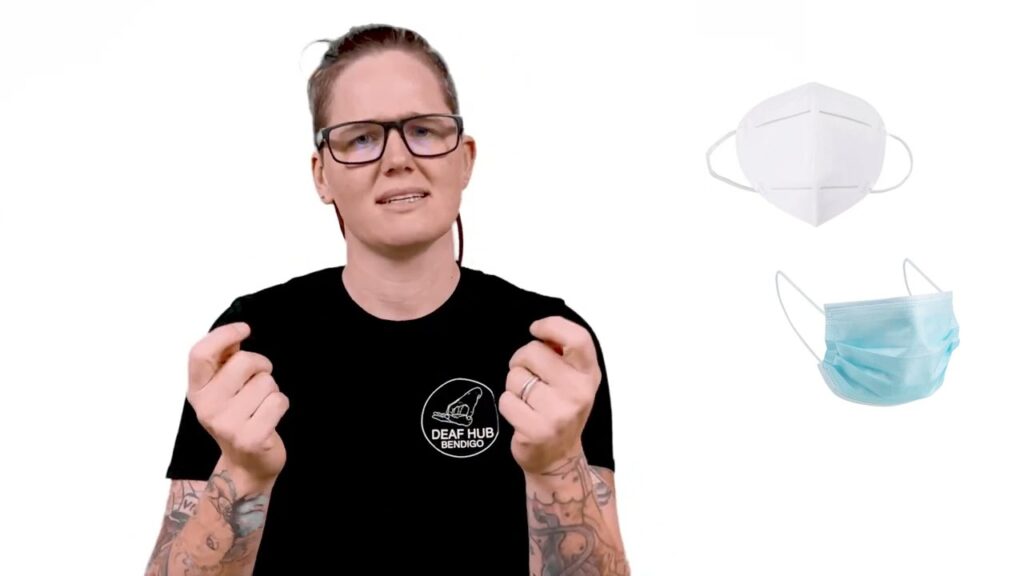
“Face mask” in Auslan denotes the masks worn for protection, particularly during health crises or in medical environments. This term frequently appears in discussions about health and safety, especially regarding public health measures.
Table of Contents
How to Sign “Face Mask”
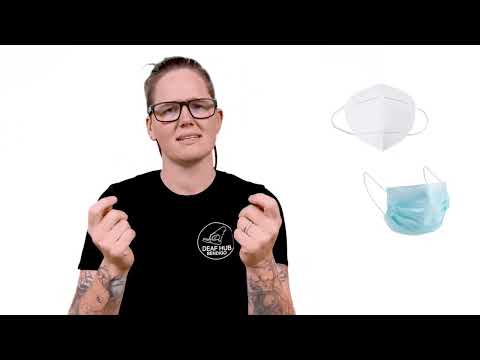
- Start with both hands open and facing down, positioned in front of your face.
- Bring your hands together, with your fingers slightly curved, as if you are holding a face mask.
- Move your hands outward and slightly upwards, simulating the action of putting a mask on your face.
- Finish by bringing your hands back to the starting position, ensuring your facial expression shows understanding or concern about wearing a mask.
Common Mistakes
- Using flat hands instead of slightly curved fingers, which can make the sign unclear.
- Positioning the hands too far from the face, losing the connection to the action of wearing the mask.
- Forgetting to incorporate facial expressions, which are crucial for conveying the context and emotion behind the sign.
Related Signs
- 1 – Sign for the number one.
- 100 – Sign for the number one hundred.
- 10 – Sign for the number ten.
- 12 – Sign for the number twelve.
- 15 – Sign for the number fifteen.
Using “Face Mask” in Everyday Conversations
In everyday conversations, the sign for “Face Mask” can be integrated naturally into discussions about health, safety, or social situations. Here are a few example sentences where this sign might come up:
- “I wear face mask when I go shopping.” (Face Mask – I – wear – shopping)
- “Do you have face mask to share?” (You – have – face mask – share)
- “Many people use face mask during flu season.” (Many people – use – face mask – flu season)
These examples illustrate how the sign for “Face Mask” fits into various contexts, such as discussions about personal protection, community health measures, or even polite requests when interacting with friends.
Cultural Notes
The sign for “Face Mask” holds significant cultural relevance within the Australian Deaf community, especially in the context of public health discussions during the COVID-19 pandemic. The Deaf community often emphasizes the importance of visual communication, and the face mask can hinder lip-reading. This has led to increased awareness about the need for transparent masks or other adaptations to ensure effective communication.
While the sign for “Face Mask” is generally consistent across Australia, some regional dialect variations may exist. In northern parts of Australia, there may be slight differences in speed or facial expression when signing. Observing and engaging with local Deaf communities can help to appreciate these nuances.
Tips for Learning This Sign
To effectively practice and remember the sign for “Face Mask,” consider the following tips:
- Mirror Practice: Stand in front of a mirror and practice the sign. This allows you to see your hand movements and facial expressions, ensuring they are clear and accurate.
- Watch for Non-Manual Features: Pay attention to the facial expressions and body language that accompany the sign. These non-manual features add meaning and context, which are essential in Auslan.
- Use in Short Signed Sentences: Incorporate “Face Mask” into short sentences while practicing with a partner or recording yourself. This will help reinforce the sign in meaningful contexts.
With regular practice and engagement with the Deaf community, you’ll become more comfortable using the sign for “Face Mask” in your conversations.
Frequently Asked Questions
How can I use the sign in a sentence?
You can say, “I need to wear a face mask” by signing “I need face mask.”
Are there regional variations in the sign?
While the core sign remains similar, some regions may have slight variations in movement or positioning.
What are some signs similar to “face mask”?
Signs like “mask,” “safety,” and “health” can be related and often used in similar contexts.
How does this sign compare with BSL?
BSL (British Sign Language) has its own sign for “face mask,” and while it may look similar, the hand shapes and movements differ.
Any tips for teaching this sign?
Encourage learners to practice with a mirror to observe their hand shapes and facial expressions for clarity.
Practice This Sign
Try signing Face Mask In Auslan with your camera and get AI coaching on your handshape, movement, and location.
Free · No signup required