
Emotions in Australian Sign Language (Auslan)

The sign for “emotions” in Australian Sign Language (Auslan) represents the various feelings and emotional states that people experience. It’s commonly used in conversations to express how someone is feeling or to discuss emotional topics. Understanding and using this sign can enhance communication about emotions in a culturally sensitive way.
How to Sign “Emotions”
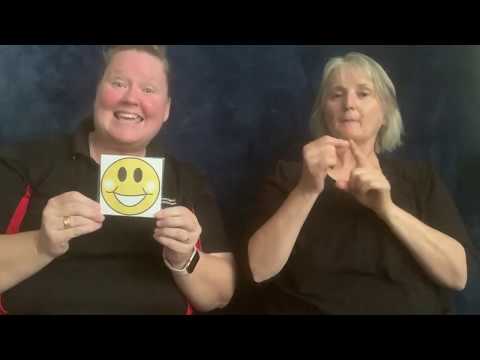
- Start with both hands in a flat handshape (like a “B” handshape) with palms facing down.
- Position your hands at the center of your chest, just below your collarbone.
- Move your hands outward and slightly upward, keeping them flat, as if you are expanding or expressing the emotions.
- Maintain a neutral or expressive facial expression that matches the emotion you are conveying. This facial expression is crucial in sign language.
Common Mistakes
- Forgetting to use facial expressions, which are essential in conveying emotions accurately.
- Using the wrong handshape; ensure that your hands are flat and positioned correctly.
- Not moving your hands outward enough to show the intensity of the emotions being expressed.
Related Signs
- (Auslan) – A sign language used in Australia that shares similarities with ASL.
- 1 – Represents the number one, often used in counting emotions or feelings.
- 10 – Represents the number ten, could be used in discussions about emotional scales.
- 100 – Represents the number one hundred, useful for discussions about extreme emotions.
- 15 – Represents the number fifteen, can be used in various contexts, including emotional discussions.
Frequently Asked Questions
How do I use “emotions” in a sentence?
You can say, “I have many emotions today,” by signing “I” + “have” + “many” + “emotions.” Use appropriate facial expressions to reflect your feelings.
Are there regional variations in this sign?
Yes, signs can vary by region, even within Australia. It’s helpful to learn from local Deaf communities to understand these nuances.
What are some similar signs to “emotions”?
Related signs include “happy,” “sad,” and “angry,” each conveying specific emotional states. Learning these can enhance your emotional vocabulary.
How does this sign compare to British Sign Language (BSL)?
BSL has different signs for emotions, and while some may be similar, it’s important to learn the specific signs used in each language.
Any tips for teaching this sign to beginners?
Encourage beginners to focus on facial expressions and to practice in pairs to help them understand the emotional context of the sign.
Can children learn this sign easily?
Yes, children often pick up signs quickly, especially when paired with expressive activities like storytelling that involve emotions.
Practice This Sign
Try signing Emotions with your camera and get AI coaching on your handshape, movement, and location.
Free · No signup required