
Earlier in Australian Sign Language (Auslan)
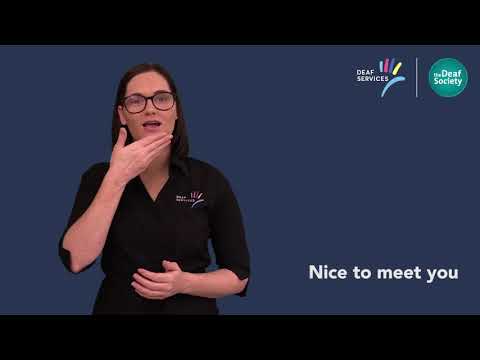
The sign for “earlier” in Auslan expresses ideas related to time, specifically referring to something that happened before the current moment. It is commonly used in conversations about past events or when discussing a timeline of occurrences.
Table of Contents
How to Sign “Earlier”

- Start with your dominant hand in a flat handshape (similar to a “B” handshape) with your palm facing down.
- Position your hand near your forehead, slightly to the side of your head.
- Move your hand forward and slightly downward, away from your forehead, while keeping the flat handshape.
- Maintain a neutral facial expression, or you can slightly raise your eyebrows to indicate that you are referring to a past event.
Common Mistakes
- Not moving the hand away from the forehead enough, which can lead to confusion about the intended meaning.
- Using the wrong handshape, such as a fist, instead of the flat handshape.
- Forgetting to incorporate facial expressions that enhance the understanding of the sign’s timing context.
Related Signs
- 1 – Sign for the number one, often used in counting or indicating a sequence.
- 10 – Represents the number ten, useful in discussions involving quantity.
- 100 – Sign for one hundred, commonly used in financial discussions or large quantities.
- 11 – The sign for eleven, often used in counting or listing items.
- 12 – Represents the number twelve, useful in various contexts.
Using “Earlier” in Everyday Conversations
The sign “Earlier” is commonly used in everyday conversations to refer to events or actions that took place before the current moment. Here are a few examples:
- Example 1: “I finished my homework earlier.”
(Sign: I / homework / finish / earlier) - Example 2: “We had lunch earlier.”
(Sign: We / lunch / have / earlier) - Example 3: “She called me earlier today.”
(Sign: She / call / me / earlier / today)
These sentences often arise in discussions about daily activities, schedules, or recounting events. Using “Earlier” helps clarify timelines and makes conversations flow smoothly.
Cultural Notes
In the Australian Deaf community, the concept of time is often visualized differently compared to hearing culture. The sign “Earlier” is not just a linguistic tool; it reflects a cultural understanding of how Deaf individuals perceive and relate to their past experiences. This sign is frequently used in storytelling, where temporal context is essential for clarity.
In terms of regional variations, there can be subtle differences in how “earlier” is signed in different areas of Australia, particularly between northern and southern dialects. However, the core concept remains consistent, allowing for effective communication across the community.
Tips for Learning This Sign
Practicing the sign “Earlier” can enhance your Auslan skills and make it easier to incorporate into conversations. Here are some practical tips:
- Mirror Practice: Stand in front of a mirror and practice the sign. This will help you ensure your handshape and motion are accurate.
- Observe Non-Manual Features: Pay attention to facial expressions and body language while signing “Earlier.” Non-manual features are crucial in Auslan for conveying tone and context.
- Use in Short Sentences: Create short sentences using “Earlier” in context. For example, “I saw him earlier” or “Earlier, it was sunny.” This helps reinforce the sign in practical situations.
Regular practice will help solidify your understanding and usage of “Earlier” in Auslan, making you a more effective communicator.
Frequently Asked Questions
How can I use “earlier” in a sentence?
You could say, “I finished my homework earlier,” which would be signed as “MY HOMEWORK FINISH EARLIER.”
Are there regional variations for the sign “earlier”?
While the basic sign is generally consistent, some regions may have slight variations in movement or facial expressions.
What other signs are similar to “earlier”?
Signs like “before” or “previous” can convey similar meanings and are often used interchangeably in context.
How does this sign compare to BSL?
In British Sign Language (BSL), the sign for “earlier” may look different, reflecting the unique grammar and structure of BSL.
What are some teaching tips for this sign?
Encourage learners to practice with friends to enhance their comfort level and to pay attention to the movements and facial expressions to convey the meaning accurately.
Practice This Sign
Try signing Earlier In Auslan with your camera and get AI coaching on your handshape, movement, and location.
Free · No signup required