
Auslan Translator in Australian Sign Language (Auslan)

The sign for “Auslan Translator” refers to someone who translates between Auslan (Australian Sign Language) and another language, often English. This sign is commonly used in contexts involving communication access, interpreting services, or discussions about language accessibility for Deaf individuals.
Table of Contents
How to Sign “Auslan Translator”
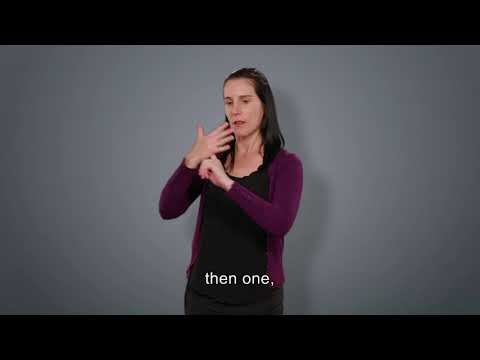
- Start with your dominant hand in a flat handshape (like a “B” handshape) and hold it in front of your chest.
- Next, use your non-dominant hand to form a “C” handshape and place it on top of your dominant hand.
- Move your dominant hand slightly forward while keeping it flat, as if you are representing the act of translating.
- Maintain a neutral facial expression, but feel free to show a bit of enthusiasm to convey the importance of translation in communication.
Common Mistakes
- Some learners may confuse the handshape; ensure you use a flat handshape for the dominant hand rather than a fist.
- Moving the hands too quickly can make the sign unclear; practice a smooth and controlled motion.
- Forgetting to incorporate facial expressions can lead to a lack of clarity in the sign’s meaning.
Related Signs
- (Auslan) – The sign for Australian Sign Language.
- 1 – The number one in ASL.
- 10 – The number ten in ASL.
- 100 – The number one hundred in ASL.
- 11 – The number eleven in ASL.
Using “Auslan Translator” in Everyday Conversations
In everyday conversations, the sign for “Auslan Translator” can be particularly useful in various contexts. Here are some example sentences that illustrate its natural use:
- Context: Discussing a meeting
“MEETING TOMORROW AUSLAN TRANSLATOR NEED.” (I need an Auslan translator for the meeting tomorrow.) - Context: Talking about events
“EVENT NEXT WEEK AUSLAN TRANSLATOR WILL BE THERE.” (There will be an Auslan translator at the event next week.) - Context: Planning a workshop
“WORKSHOP AUSLAN TRANSLATOR REQUIRED FOR DEAF PARTICIPANTS.” (An Auslan translator is required for Deaf participants in the workshop.)
These examples demonstrate how the sign can be integrated into discussions about accessibility and communication for Deaf individuals.
Cultural Notes
The term “Auslan Translator” holds significant cultural importance within the Australian Deaf community. It highlights the value placed on accessibility and effective communication for Deaf individuals. Within this community, the presence of an Auslan translator at events or meetings is often seen as a necessary measure to ensure inclusivity. It is also a reminder of the ongoing dialogue about Deaf rights and the importance of recognizing Auslan as a legitimate language.
Dialect variations can occur between northern and southern regions of Australia, though the sign for “Auslan Translator” remains largely consistent. However, it is always beneficial to engage with local Deaf communities to better understand any subtle differences or preferences in sign usage.
Tips for Learning This Sign
Learning the sign for “Auslan Translator” can be made easier with a few practical strategies:
- Mirror Practice: Use a mirror to practice the sign. This allows you to see your handshape and the positioning of your body in real time.
- Observe Non-Manual Features: Pay attention to facial expressions and body language when using this sign. Non-manual features enhance meaning and clarity in Auslan.
- Incorporate into Short Signed Sentences: Practice using the sign in context by creating short sentences about situations where an Auslan translator might be needed. This helps reinforce memory and proper usage.
By applying these tips, you can enhance your learning experience and become more comfortable using the sign for “Auslan Translator” in various settings.
Frequently Asked Questions
How do I use “Auslan Translator” in a sentence?
You can say, “I need an Auslan translator for the meeting,” to express your need for translation services.
Are there regional variations for this sign?
Yes, there may be slight variations in how the sign is performed based on different signing communities.
What are some similar signs?
Similar signs include “interpreter” and “translator,” which also focus on communication facilitation.
How does this sign compare to BSL (British Sign Language)?
While both Auslan and BSL have similarities, this sign may differ in form and execution due to the unique characteristics of each language.
What tips do you have for teaching this sign?
Encourage learners to practice in pairs to enhance their understanding of the sign’s context and usage.
Practice This Sign
Try signing Auslan Translator with your camera and get AI coaching on your handshape, movement, and location.
Free · No signup required