
Yesterday in Sign Language (ASL)
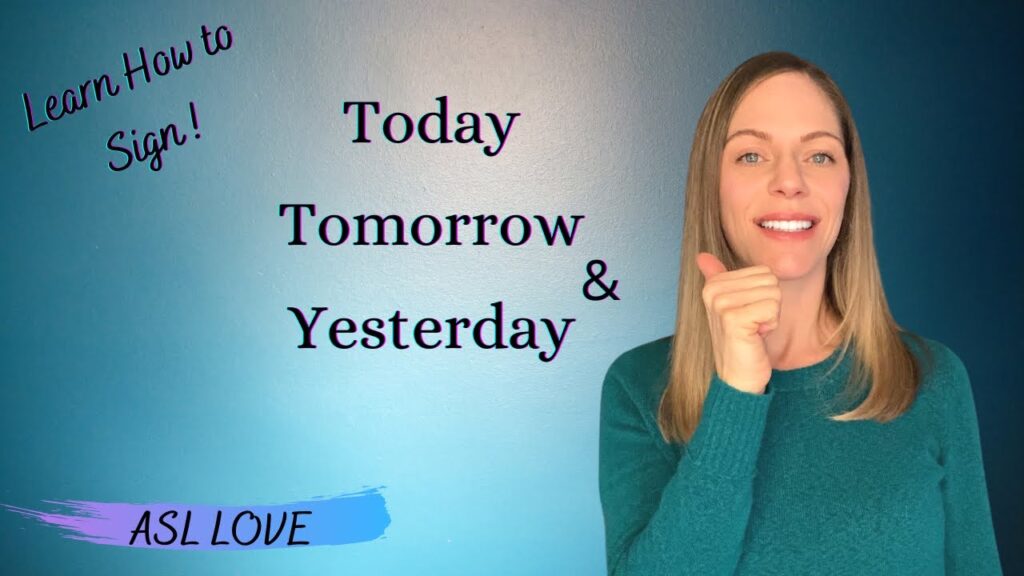
The sign “Yesterday” refers to the day before today and is commonly used in everyday conversations among Deaf individuals. It is an essential sign for discussing timelines, past events, and personal experiences. This sign helps provide context in conversations that involve recounting previous activities or events.
[VIDEO_PLACEHOLDER]
Table of Contents
Forming the sign
- Handshape: Use the dominant hand in the open “B” handshape. The fingers are extended together, and the thumb is held against the palm, creating a flat surface.
- Location: The hand starts near the chin area, close to the face. This positioning helps convey the meaning associated with a personal timeline.
- Movement: Move the hand forward and slightly away from the face, toward the shoulder or chest area. The movement should be smooth and deliberate, indicating a shift from the present to the past.
- Non-manual signals: Maintain a neutral facial expression, as this sign does not require additional facial expressions. However, you may want to emphasize a look of reflection when discussing significant past events.
To summarize, the sign “Yesterday” is formed by using an open “B” handshape starting near the chin and moving it away from the face. This motion signifies a transition from the present to a past reference point, making it clear that the discussion involves something that occurred the day before.
Using “Yesterday” in sentences
The sign “Yesterday” can be incorporated into sentences to create context about past events. For instance, you might sign, “Yesterday I went to the store,” which would look like signing “YESTERDAY STORE I GO.” This structure helps clarify the timeline of your actions.
You can also combine “Yesterday” with additional signs to convey more complex ideas. For example, “Yesterday I saw a movie” connects the temporal sign with an activity. This way of structuring sentences is common when recounting personal experiences or stories.
Signs related to “Yesterday”
Several signs are commonly used in conjunction with “Yesterday” to help further articulate past experiences. Here are a few:
- Today: Refers to the current day and is often contrasted with “Yesterday.”
- Tomorrow: Indicates the day after today, completing the timeline spectrum.
- Week: Useful for describing events that occurred over the past week, allowing for greater context.
- Hour: This sign can help specify the time of day when discussing past events.
- Past: A broader sign encompassing all events that have occurred before the present moment.
Common confusion with a similar sign
It’s important to differentiate “Yesterday” from similar signs, particularly “Last Week.” While “Yesterday” specifically refers to the day before today, “Last Week” encompasses a broader time frame. Misunderstandings can arise when discussing timelines, so paying attention to the specific handshape and movement is essential for clear communication.
FAQ
How is “Yesterday” used in storytelling?
In storytelling, “Yesterday” is typically used to set the stage for events that took place, helping the audience understand the timeline and context for the narrative being shared.
Can “Yesterday” be used in questions?
Yes, you can use “Yesterday” in questions. For example, asking “What did you do yesterday?” can be signed as “YESTERDAY YOU WHAT DO?” to gather information about past activities.
Is “Yesterday” used differently in casual conversation?
In casual conversation, “Yesterday” may be used more loosely to discuss recent events, even if they were not literally the day before, as long as the context is clear.
Are there regional variations for the sign “Yesterday”?
Generally, “Yesterday” remains consistent across the Deaf community, but some regional dialects may incorporate slight variations in movement or facial expressions, so it’s always good to be aware of local signing styles.
Practice ASL Signs
Use your camera to practice signs and get real-time AI feedback on your technique.
Free · No signup required