
Numbers in Sign Language (ASL)
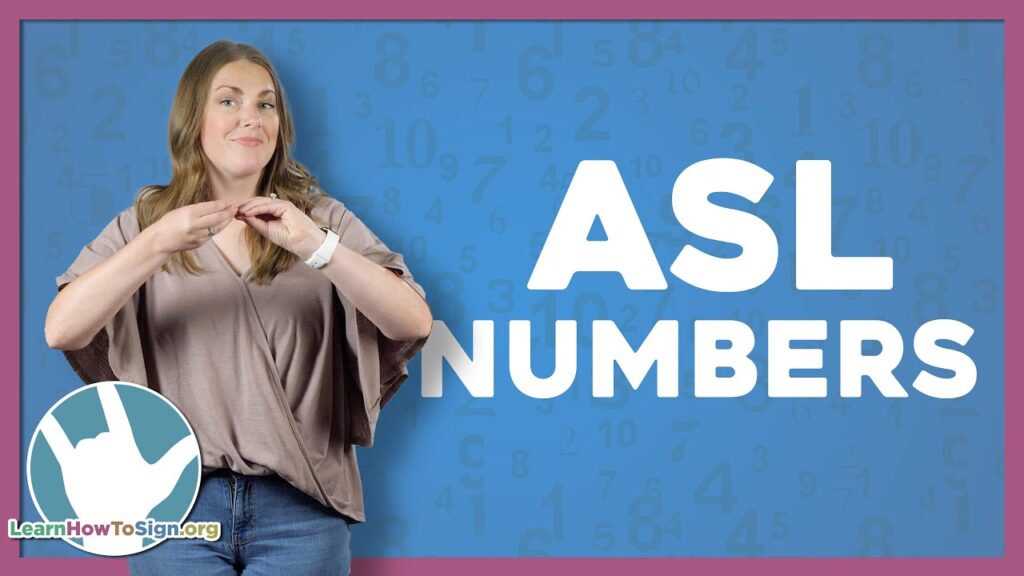
In American Sign Language, the sign for Numbers is a fundamental concept used to express quantities, mathematical values, or sequences. It is an essential part of communication in various contexts, from discussing amounts in daily life to engaging in more complex calculations or data. Understanding the sign for Numbers enhances communication and interaction within the Deaf community.
[VIDEO_PLACEHOLDER]
Table of Contents
Forming the sign
- Handshape: Start with your dominant hand in an open handshape, with fingers extended and together.
- Location: The hand is positioned in front of your body, at about chest height.
- Movement: Move your hand in a slight forward motion, while simultaneously bending the fingers in and out, as if counting numbers.
- Non-manual signals: Maintain a neutral facial expression during the sign to convey clarity. You can use raised eyebrows when emphasizing specific numbers in context.
The sign for Numbers exemplifies how essential it is to convey numerical information effectively. The combination of handshape and movement helps to indicate counting or referencing specific numerical values, making it a dynamic part of the language.
Using “Numbers” in sentences
When incorporating Numbers into sentences, you can use it to specify quantities or to express a range of values. For example:
- “I have three apples.” (sign the number three after stating ‘I have apples’)
- “The class has twelve students.” (sign twelve when mentioning ‘students’)
- “We need to count to five.” (sign five to emphasize the counting)
Using Numbers in this way helps convey important information succinctly, making conversations more efficient and clear.
Signs related to “Numbers”
Familiarizing yourself with other signs related to Numbers can enhance your understanding and usage of numerical concepts in conversation. Here are some related signs:
- Count – The act of enumerating or listing items.
- Add – This sign is used when performing addition operations.
- Subtract – Used to indicate subtraction processes.
- Multiply – Represents multiplication in mathematical contexts.
- Divide – Used for division operations.
Where this sign comes from
The sign for Numbers has roots in the visual nature of American Sign Language, where numeric concepts are conveyed through gestures. ASL has evolved over time, integrating various influences from other sign languages and regional dialects. Its design reflects the need for clear and efficient communication of numerical information, essential in daily life for the Deaf community.
Common confusion with a similar sign
Sometimes, learners confuse the sign for Numbers with the sign for “Count.” While both signs involve similar hand movements, “Count” typically emphasizes the action of enumerating items rather than referring to the concept of numbers more generally. Paying close attention to the context and the facial expressions used can help clarify which sign is appropriate in conversation.
FAQ
What is the difference between the sign for Numbers and individual digits?
The sign for Numbers refers to the concept of numerical values collectively, while individual digits are signs representing specific numbers, like one, two, three, etc.
Can I fingerspell numbers instead of using the sign?
Yes, fingerspelling is an option for representing numbers, especially for larger or more complex numerical values, but using the sign for Numbers is often faster and more efficient in casual conversation.
Is there a specific way to sign large numbers?
Yes, for large numbers, you can break them down into smaller components or use sign combinations. Context and clarity are key to ensuring the message is understood.
Are there regional differences in signing numbers?
Yes, like many signs in ASL, there can be variations based on regional influences. It’s helpful to learn from local Deaf community members for the most common usages.
Practice ASL Signs
Use your camera to practice signs and get real-time AI feedback on your technique.
Free · No signup required