
Subtract in Sign Language (ASL)
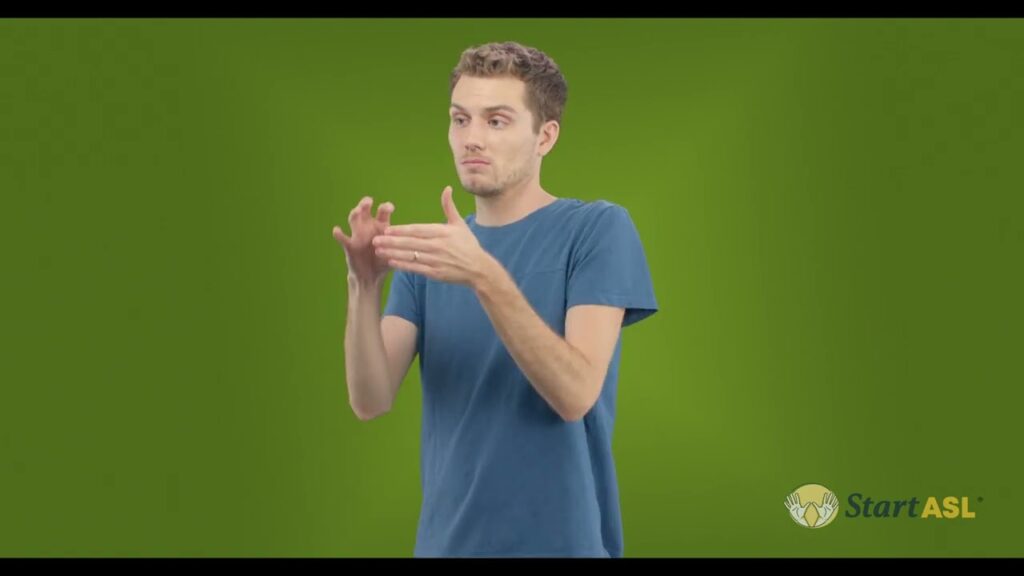
The sign “Subtract” is used to express the mathematical action of taking one quantity away from another. This sign is commonly used in educational contexts, especially when teaching mathematics or discussing numerical concepts. It conveys the idea of reduction or decrease, making it essential for discussions around basic arithmetic.
[VIDEO_PLACEHOLDER]
Table of Contents
How to Form the Sign “Subtract”
- Handshape: Begin with a flat handshape, similar to a “B” handshape, with your dominant hand positioned palm down.
- Location: Position your dominant hand in front of your body, typically around waist height or slightly higher, depending on your comfort.
- Movement: Start by bringing your dominant hand forward a short distance and then pulling it back towards your body, as if you are physically removing or taking something away.
- Non-manual signals: Incorporate a facial expression that indicates the action of subtraction, such as furrowing your brow to emphasize the action, which can help convey the concept more clearly.
When performing the “Subtract” sign, it is essential to maintain a fluid motion and an appropriate facial expression that complements the action. This not only aids in clarity but also engages your audience, helping them to understand the mathematical concept you are discussing.
Using “Subtract” in Everyday Signing
In everyday conversations, “Subtract” can be used in various contexts, from simple arithmetic to more complex mathematical discussions. For example, you might say, “If I have ten apples and I subtract three, how many are left?” or “To find the answer, we need to subtract the lower number from the higher number.” By incorporating the sign into your mathematical discussions, you provide a visual representation that enhances comprehension.
Signs Related to “Subtract”
- Add – The action of putting together or increasing a quantity.
- Equals – Indicates that two quantities are the same.
- Multiply – The process of increasing a number by another number.
- Divide – The action of distributing a quantity into equal parts.
Common Mistakes to Avoid When Signing “Subtract”
One common mistake when signing “Subtract” is to rush the movement, which can lead to confusion. It’s crucial to ensure that your motion is clear and deliberate. Additionally, failing to use appropriate facial expressions may diminish the impact of the sign. Remember that ASL is a visual language, and non-manual signals play a significant role in conveying meaning. Always practice in front of a mirror to refine your sign and make sure it is understood correctly.
Deaf Cultural Note
Math concepts are often a fundamental part of education within the Deaf community, and using signs like “Subtract” helps bridge the gap for those who are more visual learners. Many Deaf educators emphasize the importance of incorporating signs into lessons to create a more engaging and relatable learning experience. Understanding the cultural context in which these signs are used can enhance your ability to communicate effectively.
FAQ
What age group uses the sign “Subtract”?
The sign “Subtract” is commonly introduced to children in elementary school as part of their basic math education, but it can be used by all age groups whenever mathematical discussions arise.
Is “Subtract” used in advanced mathematics?
Yes, while “Subtract” is primarily associated with basic arithmetic, it is also applicable in more advanced mathematical discussions involving algebra, calculus, and other areas where subtraction is relevant.
Can “Subtract” be used in a non-mathematical context?
While “Subtract” is mainly used in mathematical contexts, it can metaphorically describe taking something away or reducing quantities in various situations, such as in discussions about resources or time.
How can I improve my signing of “Subtract”?
To improve your signing of “Subtract,” practice in front of a mirror and record yourself. Pay attention to your handshape, movement, and facial expressions, which are crucial for conveying the correct meaning.
Practice ASL Signs
Use your camera to practice signs and get real-time AI feedback on your technique.
Free · No signup required