
Hungry in Sign Language (ASL)
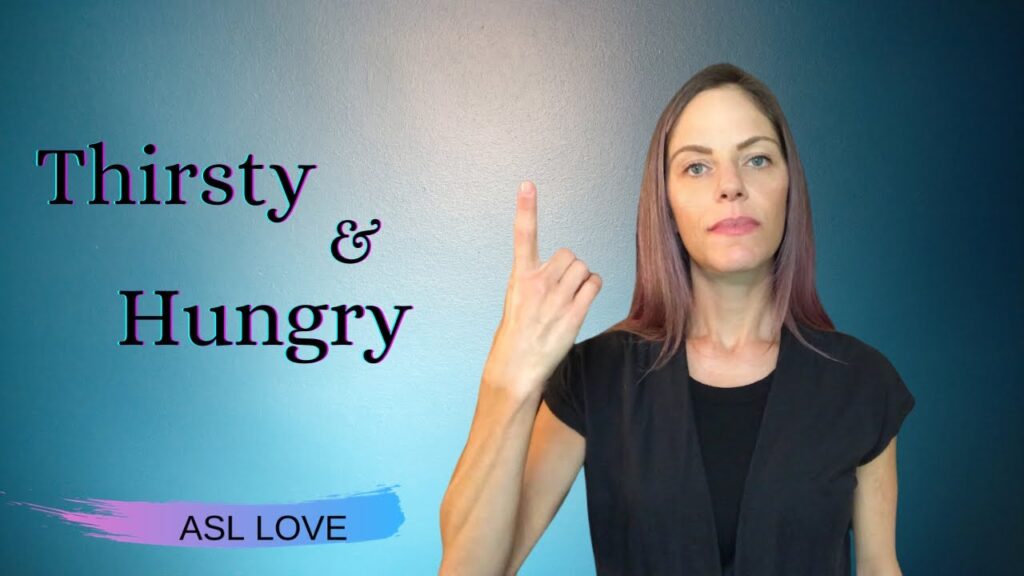
The sign “Hungry” expresses a feeling of wanting or needing food. It is used in various contexts, from casual conversations about meals to more serious discussions about hunger. This sign is an essential part of daily communication, especially when discussing food preferences or needs.
[VIDEO_PLACEHOLDER]
Table of Contents
Forming the sign
- Handshape: Use a dominant hand in a flat shape (like the palm of your hand facing down). You may also choose to use the ‘bent’ fingers shape, resembling a claw.
- Location: Position your hand near your stomach, preferably in the center of your body.
- Movement: Move your hand downward as if pulling something from your stomach. The motion should be gentle yet clear, indicating the sensation of hunger.
- Non-manual signals: Accompany the sign with a facial expression that conveys the feeling of hunger. For example, slightly furrowing your brows or a slight frown can effectively communicate this emotion.
When forming the sign “Hungry,” ensure that your hand movement is smooth and deliberate. The combination of handshape, location, and facial expressions makes the sign very expressive, conveying not just the word but the associated feeling of hunger.
Using “Hungry” in sentences
In everyday conversations, you might say, “I am hungry,” which can be signed as “I” + “Hungry.” To ask someone if they are hungry, you could sign, “You hungry?” Context matters, so you can adjust your facial expressions to indicate urgency or intensity. For instance, if you’re very hungry, you might show a more exaggerated facial expression and a quicker hand movement.
Signs related to “Hungry”
To enhance your ASL vocabulary, here are some related signs:
- Food – used to refer to items you may eat.
- Eat – to indicate the action of consuming food.
- Full – the opposite feeling, when you have eaten enough.
- Snack – a light meal or treat, often eaten between main meals.
- Cook – related to preparing food, relevant when discussing meals.
Common confusion with a similar sign
Many learners confuse “Hungry” with the sign for “Thirsty.” While both signs involve similar hand shapes and movements, “Thirsty” typically uses a handshape moving near the mouth, indicating the need for a drink. Paying attention to facial expressions and hand placement can help distinguish between these two important signs.
FAQ
What is the difference between “Hungry” and “Thirsty” in ASL?
The signs for “Hungry” and “Thirsty” are distinct in their movements and hand placements. “Hungry” is signed near the stomach, while “Thirsty” is typically signed near the mouth.
When should I use the sign “Hungry”?
You can use “Hungry” whenever you want to express your need for food, whether in a casual setting or when discussing meal plans with friends or family.
Can I use “Hungry” to refer to cravings for specific foods?
Yes, you can specify by adding the sign for the food you are craving after signing “Hungry,” such as “Hungry” + “Pizza.”
Is there a sign for ‘I’m starving’?
While “Hungry” can express needing food, you can convey a stronger sense of urgency by modifying your non-manual signals, such as widening your eyes or exaggerating your movements.
How can I practice the sign “Hungry”?
Practice in front of a mirror to check your hand shape and facial expressions. Pair it with related signs to enhance your vocabulary and fluency.
Practice ASL Signs
Use your camera to practice signs and get real-time AI feedback on your technique.
Free · No signup required