
Full in Sign Language (ASL)
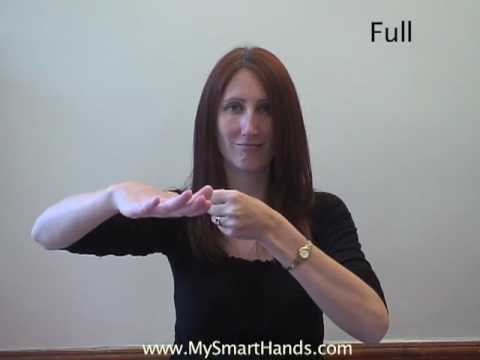
The sign “Full” is used to describe a container, space, or person that has reached its capacity or is completely satisfied. It can refer to anything from a glass filled to the brim to someone feeling completely content after a meal. This sign is commonly used in various contexts, including daily conversations about food, experiences, and emotions.
[VIDEO_PLACEHOLDER]
Table of Contents
How to Form the Sign “Full”
- Handshape: Use your dominant hand in a closed fist shape.
- Location: Position your hand at waist height, in front of your body.
- Movement: Start with your fist closed, then open it slightly as if you are showing the contents of a full container. The movement can be subtle, indicating fullness without excessive motion.
- Non-manual signals: Accompany the sign with a facial expression reflecting satisfaction or contentment. This may include slightly raised eyebrows and a smile.
The sign conveys the idea of being filled to capacity, which can be interpreted both literally and figuratively. The opening motion from a fist to slightly spread fingers emphasizes the concept of fullness, while the facial expressions enhance the meaning.
Using “Full” in Sentences
In everyday conversations, “Full” can be used in various contexts. For example, you might sign, “I am full” after a meal or “The glass is full” when discussing drinks. The versatility of this sign allows it to express satisfaction or the state of being filled, making it useful in both casual and more specific scenarios.
Related Signs to “Full”
Here are some signs that are related to the concept of “Full”:
- Empty – indicates the opposite of full, often used to describe a container that has no contents.
- Satisfied – relates to a feeling of contentment, often used after meals or fulfilling experiences.
- Crowded – refers to a space that is overly full with people, typically used in social settings.
- Load – signifies a filled state, often used in the context of carrying or transporting items.
- Complete – indicates that something is finished or has reached its full potential, used in various contexts.
Common Confusion with a Similar Sign
Many learners confuse “Full” with the sign for “Complete.” While both signs share thematic elements of wholeness, “Full” focuses on physical capacity, such as containers or personal satisfaction, whereas “Complete” emphasizes a state of having all necessary components or finishing a task. Understanding the subtle differences in context can help prevent miscommunication.
Frequently Asked Questions about “Full”
What is the difference between “Full” and “Satisfied”?
“Full” generally refers to physical capacity, like a full glass or person, while “Satisfied” indicates emotional contentment, often after a meal or experience.
Is there a specific context where I should use “Full”?
“Full” can be used in various contexts, such as meals, containers, or even when discussing personal feelings of satisfaction or happiness.
Can I use “Full” to describe emotions?
Yes, “Full” can describe emotional states, particularly when expressing feelings of being content or happy after an experience.
How does facial expression affect the meaning of “Full”?
Facial expressions enhance the sign by conveying deeper emotions, such as happiness or satisfaction, which help clarify the context in which “Full” is used.
Are there different signs for “Full” in various regions?
While the sign “Full” is generally consistent in ASL, regional variations may exist. It’s best to learn from local Deaf communities to recognize any differences.
Practice ASL Signs
Use your camera to practice signs and get real-time AI feedback on your technique.
Free · No signup required