
Eat in Sign Language (ASL)
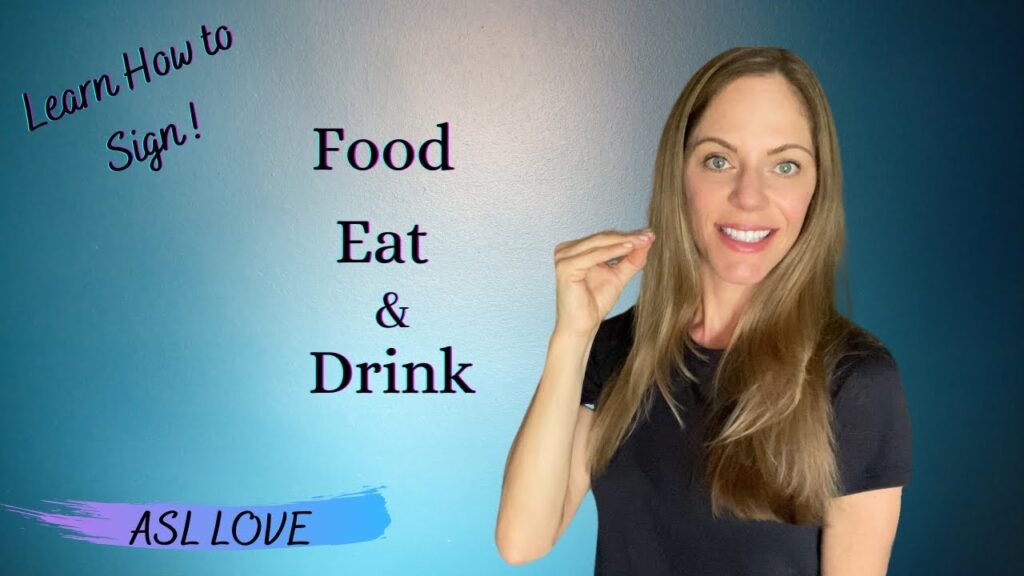
The sign “Eat” represents the action of consuming food and is a fundamental part of everyday communication. Used in various contexts, it can refer to eating in general or be specific to a certain type of food or situation. This sign is easily recognizable and widely understood in Deaf communities.
[VIDEO_PLACEHOLDER]
Table of Contents
Forming the sign
- Handshape: The dominant hand forms a flat “B” handshape, with fingers extended and held together, resembling a plate.
- Location: The sign is performed near the mouth, typically just below the chin.
- Movement: The hand moves slightly towards the mouth, mimicking the action of bringing food to the mouth. This is a gentle, natural motion.
- Non-manual signals: A smile or neutral expression can accompany the sign, depending on the context. Maintaining eye contact while signing is also important.
The formation of this sign emphasizes the action of eating, making it visually clear and intuitive. When practicing, focus on fluidity and naturalness, as the sign is often accompanied by context-specific expressions that enhance communication.
Showing tense, aspect & repetition
In ASL, conveying tense and aspect can be achieved through the use of time indicators and context. For example:
- Present tense: Simply sign “Eat” to indicate that someone is currently eating.
- Past tense: To show that someone has already eaten, you can use a circular motion away from the mouth before signing “Eat.” This indicates completion of the action.
- Future tense: For future actions, you can sign “Eat” with a forward motion from the mouth, indicating that the action will happen soon.
- Repetition: To indicate that someone is eating repeatedly, you can use a downward motion with the handshape while signing “Eat” to suggest multiple occurrences.
These modifications help clarify when someone is eating or when they plan to eat, which is especially useful in storytelling or conversations about meals.
“Eat” in everyday signing
The sign “Eat” is common in daily communication, often combined with other signs to create meaningful sentences. Here are a few examples:
- Eat food: Signing “Eat” followed by the sign for “food” gives clarity on what is being eaten.
- Eat lunch: Combine “Eat” with the sign for “lunch” to specify the meal time.
- Let’s eat: This can be signed by combining “Eat” with the sign for “let’s,” inviting others to join in the action.
The versatility of this sign allows for various expressions and combinations, facilitating richer conversations about food and meals in social settings.
Signs related to “Eat”
Here are some related signs that you may find useful:
- Food – Refers to substances that can be consumed.
- Drink – Signifying beverages, often used alongside “Eat.”
- Cook – Relates to the preparation of food before eating.
- Hungry – Expresses the need or desire to eat.
- Recipe – Refers to the instructions for preparing food, often relevant in conversations about cooking and eating.
Common confusion with a similar sign
One common confusion with “Eat” is the sign for “Drink.” Both signs involve similar handshapes and movements. However, while “Eat” uses a flat handshape moving towards the mouth, “Drink” typically involves a cupped handshape (like holding a cup) that mimics the action of drinking. Paying attention to the handshape and context can help clarify which action is being referenced.
FAQ
What is the sign for “I want to eat”?
To sign “I want to eat,” you would combine the sign for “I” (pointing to yourself) with “want” (a claw handshape moving toward your chest) followed by the sign for “Eat.”
Can “Eat” refer to eating something specific?
Yes, you can specify what you are eating by following “Eat” with a sign for the specific food item, such as “apple” or “pizza.”
How do you sign “Food” in ASL?
The sign for “Food” is made using a flat handshape that moves to the mouth, similar to “Eat,” but it is a broader concept.
Is there a sign for “snack”?
Yes, the sign for “snack” is similar to “Eat,” but you make the sign smaller and quicker to indicate a smaller portion of food.
What facial expressions should I use when signing “Eat”?
Facial expressions can enhance the meaning of your sign. A smile can indicate enjoyment, while a neutral expression might indicate a simple statement about eating.
Practice ASL Signs
Use your camera to practice signs and get real-time AI feedback on your technique.
Free · No signup required