
Equal in Sign Language (ASL)
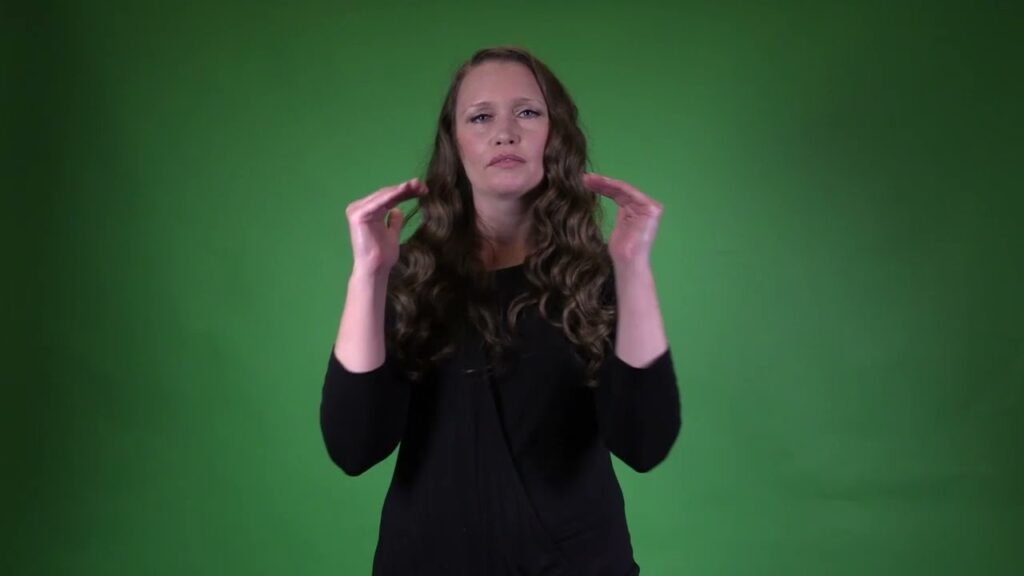
The sign “Equal” is commonly used to express the concept of sameness or equivalence in various contexts, whether in mathematics, comparisons, or general discussions. It is an essential sign for conveying fairness or balance, often seen in educational settings, discussions about rights, or when comparing values. Understanding this sign can greatly enhance your communication in various situations.
[VIDEO_PLACEHOLDER]
Table of Contents
Forming the sign
- Handshape: Use both hands in the “A” handshape, with your fingers curled down and your thumb extended alongside the fingers.
- Location: Start with your hands positioned around shoulder height, in front of your body.
- Movement: Bring the two hands together, moving them slightly towards each other and then back apart while maintaining the “A” shape. They should end up positioned parallel to one another.
- Non-manual signals: Maintain a neutral facial expression, as the sign does not require specific facial expressions that indicate intensity or emotion.
This sign visually represents the concept of equality through the alignment and balance of the hands. The movement of bringing the hands together reflects the idea of two things being the same or equivalent. Understanding the subtleties of the handshape and movement is crucial for accurate communication.
Using “Equal” in sentences
“Equal” can be used in various contexts, such as mathematical equations, discussions of fairness, or in expressing similar qualities. For instance, in a sentence like “Two plus two is equal to four,” you would sign “Equal” to represent the relationship between the two sides of the equation. In a social context, you might say, “Everyone should be treated as equal,” using the sign to emphasize fairness in treatment.
Signs related to “Equal”
- Same: This sign indicates similarity or identity, often used interchangeably with “Equal” in certain contexts.
- Fair: This sign emphasizes justice and impartiality, which can relate to the concept of equality.
- Balance: This sign reflects the idea of equilibrium, which is closely connected to the notion of being equal.
- Equation: This mathematical term involves numbers and equality, making it relevant in discussions involving “Equal.”
Common confusion with a similar sign
Often, learners may confuse the sign “Equal” with “Same,” as both convey a sense of similarity. However, “Equal” typically refers to mathematical or abstract concepts of equivalence, while “Same” may be used to describe items or people that are identical in nature or characteristics. Being aware of the context in which each sign is used can help prevent confusion.
FAQ
What contexts is “Equal” most commonly used in?
“Equal” is frequently used in mathematical contexts, discussions regarding fairness or rights, and whenever there’s a need to express equivalence between two entities or ideas.
Can “Equal” be used in non-mathematical contexts?
Yes, “Equal” can be used in various situations beyond mathematics, such as discussing equality in social issues or expressing fairness in treatment.
How can I improve my signing of “Equal”?
Practice the handshape and movement in front of a mirror to ensure proper form. Additionally, try incorporating it into sentences to gain fluency in its usage.
Is there a regional variation for the sign “Equal”?
Generally, “Equal” remains consistent across various ASL communities, but it’s always beneficial to observe local variations or preferences among different users.
Practice ASL Signs
Use your camera to practice signs and get real-time AI feedback on your technique.
Free · No signup required