
Fair in Sign Language (ASL)
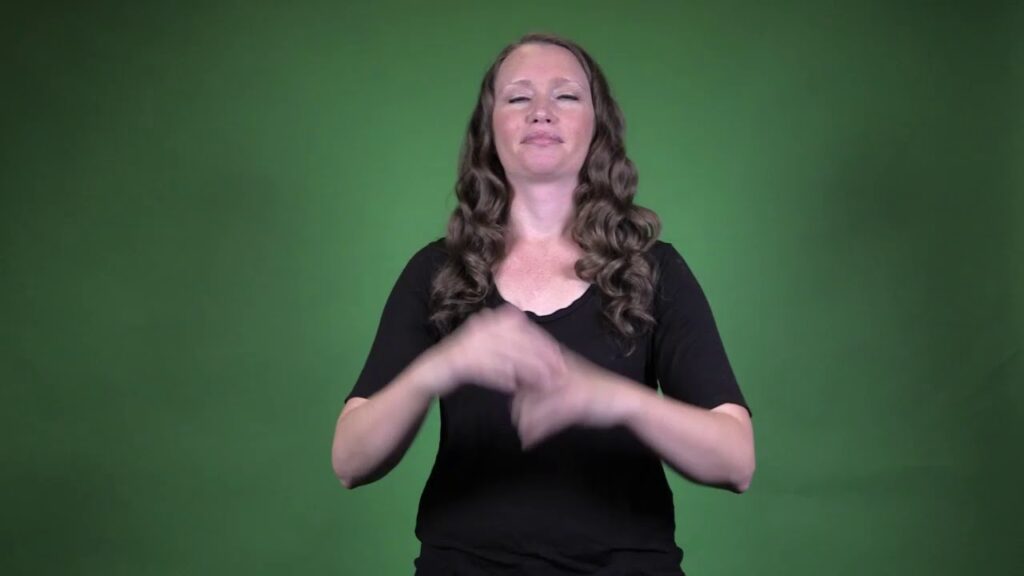
The sign “Fair” is commonly used to describe something that is just or equitable. It can refer to fairness in a variety of contexts, such as in discussions about rules, judgments, or even personal interactions where equity is a concern. This sign is also frequently used in conversations about games, competitions, or any situation where impartiality is important.
[VIDEO_PLACEHOLDER]
Table of Contents
Forming the sign
- Handshape: The dominant hand forms the letter “F” in ASL, where the thumb and index finger touch to create a circle, while the other fingers are extended and held together.
- Location: Start with the hand at the side of your forehead or the chin area, depending on your preference for clarity or personal style.
- Movement: Move your hand outward away from your face in a small arc, emphasizing the gesture of the word “Fair.” The motion should be smooth and deliberate to convey the meaning effectively.
- Non-manual signals: Maintain an expression that matches the meaning of fairness. This could include raised eyebrows or a slight nod, depending on the context in which you’re using the sign.
When signing “Fair,” it’s essential to keep your movements fluid and to use facial expressions that reflect the context. This helps in conveying not just the sign itself, but also the underlying sentiment of fairness that you wish to express.
Using “Fair” in sentences
Here are some examples of how “Fair” can be incorporated into everyday conversations:
- “The game was fair; everyone had an equal chance to win.”
- “It’s not fair that only some people get to participate.”
- “Make sure to make the decision based on fairness.”
These examples illustrate how “Fair” can be used to discuss various situations, reinforcing the importance of equality and justice in communication.
Signs related to “Fair”
There are several signs that relate to the concept of fairness. Here are a few:
- Equal – Used to denote equality between two or more subjects.
- Just – Often used interchangeably with “Fair,” focusing on moral righteousness.
- Impartial – Signifying neutrality in judgment, crucial in discussions of fairness.
- Right – Reflecting correctness, which can sometimes intersect with the idea of fairness.
Common confusion with a similar sign
One common area of confusion arises between the signs for “Fair” and “Just.” While both terms can be synonymous, “Fair” often has a broader connotation that includes not only justice but also balance and equity in a situation. Understanding the subtle differences can help improve clarity in your signing.
FAQ
What contexts can “Fair” be used in?
“Fair” can be applied in various contexts including discussions about rules, competitions, and personal relationships where impartiality or equality is being addressed.
Are there different signs for “Fair” in other regions?
While the sign for “Fair” is generally consistent in ASL, regional variations may exist. It’s useful to observe and ask local Deaf individuals for confirmation.
How can I emphasize “Fair” in my signing?
You can emphasize “Fair” by using a stronger movement or adding facial expressions that convey your feelings about the fairness of the situation.
Is “Fair” used more often as an adjective or a noun?
“Fair” is primarily used as an adjective, but it can also function as a noun in specific contexts, such as when referring to a “fair” as in a carnival or event.
Can “Fair” be used in a negative context?
Yes, you can use “Fair” in a negative context, such as saying something is “not fair,” which might express frustration or discontent regarding a situation.
Practice ASL Signs
Use your camera to practice signs and get real-time AI feedback on your technique.
Free · No signup required