
Calm in Sign Language (ASL)
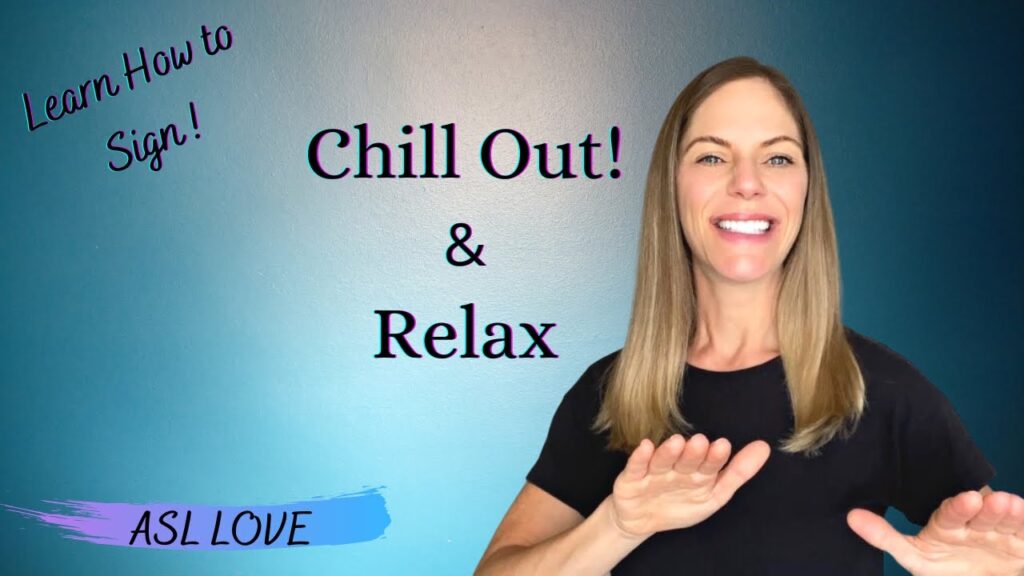
Calm is a sign that conveys a sense of peacefulness and tranquility. It can be used to describe a person’s emotional state or to instruct someone to relax. This sign is useful in various contexts, from personal conversations to discussions about mental health.
[VIDEO_PLACEHOLDER]
Table of Contents
How to Form the Sign “Calm”
- Handshape: Start with your dominant hand open, fingers extended and together. The palm should face downwards.
- Location: The sign is made in front of your chest area, roughly at the heart level.
- Movement: Move your hand downwards smoothly, as if you are gently pushing away tension or stress from your body.
- Non-manual signals: Maintain a soft facial expression throughout the sign. Exhaling slowly while signing can help convey the idea of calmness.
To execute the sign, begin with your hand in the specified handshape at chest level. As you move your hand downwards, imagine releasing any stress or anxiety. This motion is fluid and steady, which helps reinforce the meaning of calmness. Facial expressions play a vital role in conveying the emotional quality of the sign, so make sure to appear relaxed and serene.
Using “Calm” in Everyday Signing
The sign for Calm can be integrated into various sentences to convey emotions or advice. For example, you might say, “Please stay calm,” when giving reassurance or “I feel calm today,” to express your emotional state. Here are a few example sentences:
- “I need to remain calm during the presentation.”
- “She always finds ways to keep calm in stressful situations.”
- “The music helps me feel calm.”
Signs Related to “Calm”
Several signs carry similar meanings or concepts that may complement “Calm.” Here are a few signs you might find useful:
- Peace: Represents a state of tranquility and absence of conflict.
- Relax: Indicates easing tension in the body or mind.
- Serene: Conveys a sense of calmness and peacefulness in a more profound context.
- Stress: For contrasting discussions about emotional states.
Common Confusion with a Similar Sign
Calm may sometimes be confused with the sign for “Relax.” While both convey a similar message, “Relax” generally implies a broader sense of easing tension, whereas “Calm” specifically denotes a peaceful emotional state. Be mindful of the context in which you use these signs to ensure clear communication.
Frequently Asked Questions about “Calm”
What is the difference between “Calm” and “Peace”?
While both signs convey tranquility, “Calm” is more personal and emotional, often addressing an individual’s state of mind. “Peace,” on the other hand, can refer to broader concepts, such as world peace or harmony in relationships.
Can “Calm” be used in different contexts?
Yes, “Calm” can describe personal feelings, instruct others to maintain a peaceful demeanor, or even be used to talk about calming environments, such as nature.
Are there any regional variations of the sign “Calm”?
Generally, the sign for “Calm” remains consistent across most regions, although individual signers may have slight variations based on personal style or local dialects.
How can I improve my signing of “Calm”?
Practice consistently in front of a mirror to monitor your facial expressions and hand movements. Watching videos of fluent signers can also enhance your understanding of subtle nuances.
Is “Calm” used more frequently in formal or informal settings?
“Calm” can be used effectively in both formal and informal settings. It is applicable in discussions about mental health as well as casual conversations about daily feelings.
Practice ASL Signs
Use your camera to practice signs and get real-time AI feedback on your technique.
Free · No signup required