
Peace in Sign Language (ASL)
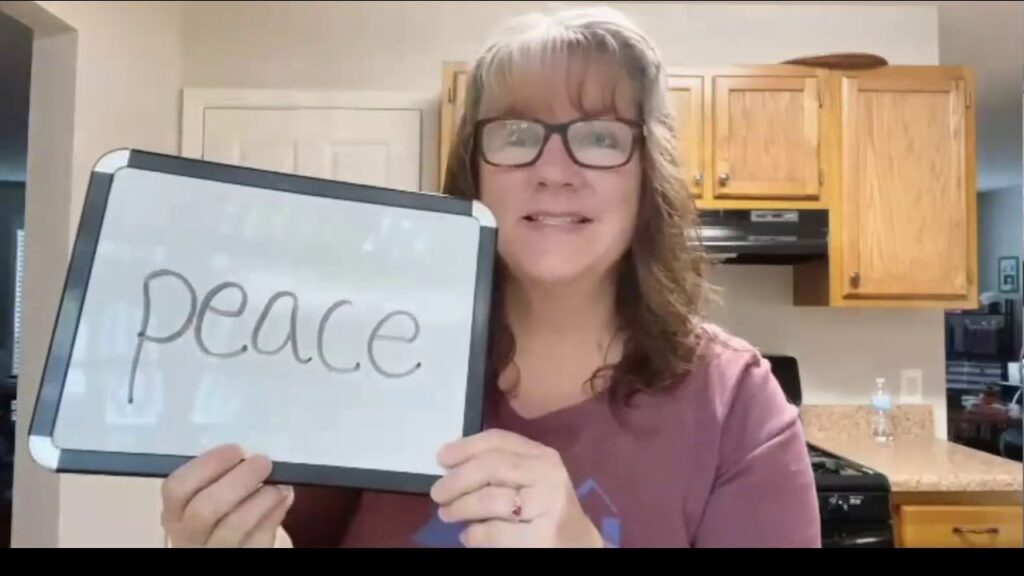
The sign “Peace” represents a powerful concept often associated with tranquility, harmony, and the absence of conflict. It is commonly used in discussions about social justice, community well-being, and personal well-being. “Peace” can be a standalone expression or part of broader conversations about global issues, relationships, and emotional states.
[VIDEO_PLACEHOLDER]
Table of Contents
Forming the sign
- Handshape: Start with your dominant hand in a “B” handshape (fingers extended and together, palm facing down).
- Location: Position your hand in front of your chest, about chin level. This is the neutral location for making the sign clear and visible.
- Movement: Move your hand slightly downward, while simultaneously rotating your palm to face upwards. This gentle movement symbolizes the idea of peace flowing outward.
- Non-manual signals: Maintain a calm and serene facial expression while signing. This non-manual element reinforces the message of peace.
The sign “Peace” conveys a sense of calmness and positive energy. When performed gently, it enhances the meaning of the sign, making it more impactful in conversation. Practicing the handshape and movement will help you convey the concept effectively.
Using “Peace” in sentences
“Peace” can be used in various contexts. For example, you might say, “I wish for peace in the world,” or “Let us find peace between ourselves.” When discussing topics such as conflict resolution or personal well-being, incorporating the sign can enhance understanding.
Signs related to “Peace”
Several signs are often associated with “Peace,” enriching your vocabulary. Examples include:
- Love – Signifying affection and deep emotional connection.
- Harmony – Representing balance and agreement between elements.
- Unity – Expressing togetherness and a sense of collective peace.
- Freedom – Indicating liberation which is often a prerequisite for peace.
Where this sign comes from
The sign “Peace” has roots in both cultural and historical contexts, influenced by various movements advocating for social justice and human rights. The visual representation captures the essence of serenity and the quest for a conflict-free existence, reflecting values held by many within the Deaf community and beyond.
Common confusion with a similar sign
Some learners may confuse the sign for “Peace” with “Thank You.” While both use similar handshapes, the location and movement are distinct. “Thank You” involves a gesture that moves away from the chin, while “Peace” is centered in front of the chest and has a downward motion. Being aware of these differences can help avoid miscommunication.
FAQ
What is the significance of the sign “Peace”?
The sign “Peace” conveys tranquility, harmony, and the idea of conflict resolution, making it essential in discussions about social justice and personal well-being.
Can “Peace” be used in different contexts?
Absolutely! The sign is versatile and can be used in conversations about global issues, personal relationships, and emotional states.
How can I improve my signing of “Peace”?
Focus on maintaining a calm facial expression and practicing the hand movements. Consider using it in various sentences to enhance your comfort level.
Are there regional variations for the sign “Peace”?
While the sign is generally consistent across various regions, some local variations may exist based on community preferences. It’s a good idea to observe how others sign it.
What should I avoid when signing “Peace”?
Avoid using jerky movements or improper facial expressions, as they can detract from the meaning of calmness and serenity associated with “Peace.”
Practice ASL Signs
Use your camera to practice signs and get real-time AI feedback on your technique.
Free · No signup required