
Age in Sign Language (ASL)
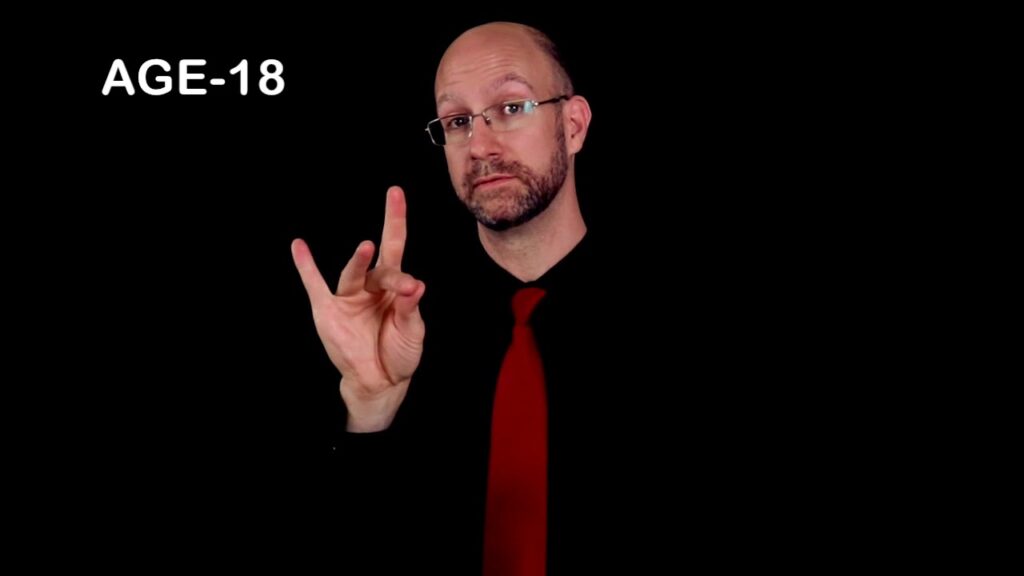
Age refers to the length of time that someone has lived or a measurement of years since birth. This sign is commonly used in various contexts, such as when discussing someone’s birthday or when asking about someone’s age. It plays a significant role in conversations to clarify age-related topics.
[VIDEO_PLACEHOLDER]
Table of Contents
How to form the sign “Age”
- Handshape: Use the flat handshape of your dominant hand. Your fingers should be extended and together, while your thumb rests against the side of your hand.
- Location: The sign is initiated near your chin or jawline. This position is crucial as it establishes a point of reference for the movement.
- Movement: Move your hand forward and slightly away from your face while maintaining the flat handshape. This motion should be smooth and deliberate, representing the passage of time.
- Non-manual signals: Accompany the sign with a facial expression that reflects the context. For instance, raising your eyebrows when asking about one’s age can indicate curiosity.
The sign for Age effectively conveys the concept of how long someone has been alive. The movement away from the face signifies the progression of time, which is central to understanding age.
Using “Age” in sentences
When incorporating Age into your sentences, consider both the context and the accompanying signs. Here are a few examples:
- To ask someone about their age: “WHAT AGE YOU?”
- To state your age: “MY AGE 25.”
- To inquire about someone else’s age: “HER AGE HOW OLD?”
This flexibility allows for a variety of questions and statements regarding age, making it a versatile sign in everyday conversations.
Signs related to “Age”
Understanding Age can be enhanced by learning related signs. Here are a few:
- Birthday – A sign used to celebrate an individual’s birth date.
- Young – This sign signifies youth or being in the early stages of life.
- Old – The opposite of young, indicating someone of advanced age.
- Time – A broader concept that connects with age, as it represents the progression in life.
Common confusion with a similar sign
A common point of confusion arises between the signs for Age and the sign for “Old.” While both involve similar handshapes and movements, the context and facial expressions used can significantly alter their meanings. Remember that Age focuses specifically on the number of years, while Old pertains more to the state of being aged. Pay attention to the context to avoid misunderstandings during conversations.
FAQ
What is the origin of the sign “Age”?
The sign for Age has evolved within the Deaf community and is based on the concept of measuring time and lifespan, akin to how we understand age in a hearing context.
Can “Age” be used in different contexts?
Yes, Age can be used in various contexts, including casual conversations, formal discussions about demographics, or when sharing personal information.
What are common mistakes when signing “Age”?
A common mistake is not using appropriate facial expressions, which can lead to confusion. Always remember to reflect curiosity or emphasis through your facial cues.
How do I practice signing “Age”?
To practice, try incorporating the sign into your daily conversations about age. Using it in sentences with others can enhance your comfort and fluidity.
Is there a specific way to ask for someone’s age?
While you can simply sign “WHAT AGE YOU?”, adding a questioning facial expression can enhance clarity and understanding of your inquiry.
Practice ASL Signs
Use your camera to practice signs and get real-time AI feedback on your technique.
Free · No signup required