
Peopleclients, Customers, Individuals, Personstāngatanoun in New Zealand Sign Language (NZSL)
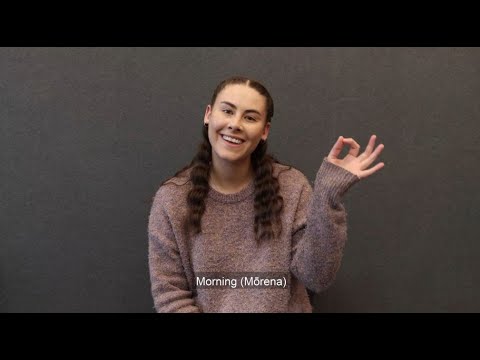
The NZSL sign for “people, clients, customers, individuals, person” represents a fundamental concept in communication, often used in everyday interactions in the Deaf community. This sign is particularly relevant in contexts like business, social settings, and community engagements, where understanding and referring to individuals is essential.
Table of Contents
How to Sign “Peopleclients, Customers, Individuals, PersonstāNgatanoun” in NZSL

- Start with both hands open and facing down, palms slightly apart.
- Bring your hands together in front of your body, maintaining the open hand shape.
- As your hands come together, slightly curve them as if you are gathering a group of individuals.
- Finish by pulling your hands apart slightly while maintaining the same hand shape, indicating a diverse group of people.
- Use facial expressions that convey inclusivity or friendliness to enhance the sign.
Common Mistakes
- Forgetting to use facial expressions, which are crucial for conveying the meaning.
- Using a fist instead of an open hand, which can change the meaning of the sign.
- Not maintaining the correct hand shape, leading to confusion with other signs.
NZSL vs ASL
In NZSL, the sign for “people” involves an open hand shape that gathers to represent community, while in ASL, the sign is often made using a flat hand that moves in a different manner. This highlights the unique characteristics of NZSL, influenced by its cultural context and its incorporation of te reo Māori signs.
Related Signs
- (All Of) You – Referring to a group of people.
- (All Of) Youyou Allkoutou (Katoa)Pronoun – Inclusive sign for addressing multiple individuals.
- (Baby’S) Dummy – Related to individuals in a familial context.
- (Be) Careful – Important in communication when referring to individuals’ safety.
- (Be) Passive – Relevant in discussing the roles of individuals in various contexts.
Frequently Asked Questions
How can I use this sign in a sentence?
You might say, “I see many people at the event” by integrating the sign while you speak.
Are there regional variations in how this sign is performed?
Some regions may emphasize different facial expressions or slight hand movements, but the core sign remains consistent across New Zealand.
What are some similar signs?
Signs like (All Of) You and (Be) Passive can be related in context and usage.
What tips do you have for learning this sign?
Practice in front of a mirror to ensure your hand shape and facial expressions are clear and expressive.
Can I combine this sign with others?
Absolutely! Feel free to use it alongside other signs to create more complex sentences or ideas.
How does this sign fit into cultural contexts?
This sign embodies the sense of community and connection within the Deaf culture, emphasizing inclusivity.
Practice This Sign
Try signing Peopleclients, Customers, Individuals, PersonstāNgatanoun with your camera and get AI coaching on your handshape, movement, and location.
Free · No signup required