
Opposite in New Zealand Sign Language (NZSL)
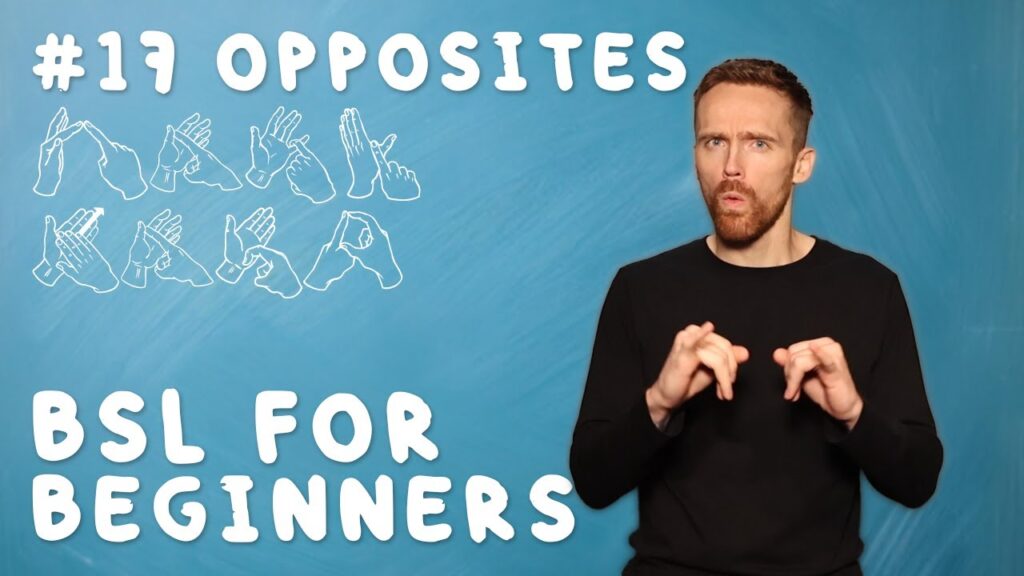
The NZSL sign for “opposite” is used to describe things that are contrary to each other, such as directions, characteristics, or concepts. This sign is commonly used in everyday conversations within the New Zealand Deaf community to clarify distinctions between contrasting ideas.
Table of Contents
How to Sign “Opposite” in NZSL
- Start with both hands open in front of you, palms facing each other.
- Move your hands apart to the sides, keeping them at shoulder height.
- As you move your hands, twist your wrists so that your palms face downwards at the end of the movement.
- Maintain a neutral facial expression or use an expressive face to enhance the meaning, depending on the context.
Common Mistakes
- Forgetting to twist the wrists, which can lead to confusion with similar signs.
- Not using enough space when signing, making it less clear that you are indicating two opposing ideas.
- Using a single hand instead of both, which may alter the intended meaning of the sign.
NZSL vs ASL
In NZSL, the sign for “opposite” involves moving both hands outward, while in ASL, it is often signed with a different handshape and movement. This reflects the influence of British Sign Language (BSL) on NZSL and highlights the unique features of New Zealand‘s own sign language.
Related Signs
- (All Of) You – A sign referring to a group addressed as a whole.
- (Be) Careful – A cautionary sign used to alert someone to potential danger.
- (Be) Passive – Used to indicate a state of being passive or inactive.
Frequently Asked Questions
How can I use “opposite” in a sentence?
You might say “The sun is opposite to the moon” by signing “sun” followed by “opposite” and then “moon” to clearly convey the relationship.
Are there regional variations for this sign in New Zealand?
While the sign for “opposite” is generally consistent across New Zealand, some users may have slight variations in movement or expression based on their local community influences.
What are some similar signs to “opposite”?
Signs like “different,” “contrary,” or “compare” share similar themes but convey different nuances in meaning.
Do you have tips for learning this sign?
Practice in front of a mirror to ensure your hand shapes and movements are accurate. Joining a local Deaf group can also provide valuable feedback.
Can I use this sign in formal settings?
Yes, “opposite” is appropriate in both casual and formal contexts, especially when discussing contrasting ideas.
What expressions should I use when signing “opposite”?
Facial expressions can help convey the contrast, so feel free to show emphasis by raising your eyebrows or widening your eyes.
Practice This Sign
Try signing Opposite with your camera and get AI coaching on your handshape, movement, and location.
Free · No signup required