
Last Name in New Zealand Sign Language (NZSL)
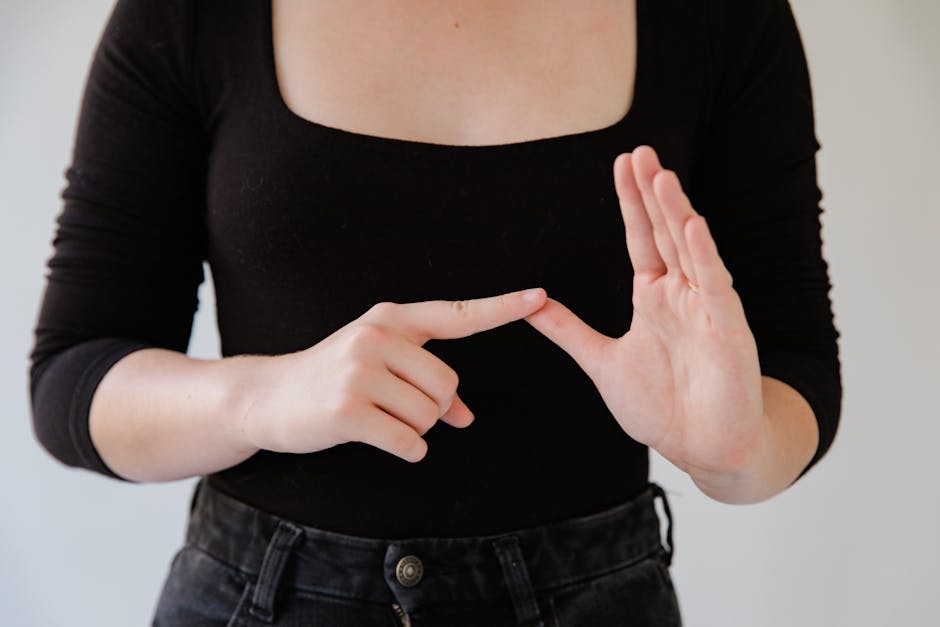
The sign for “last name” or “family name” is an essential part of introductions and conversations within the New Zealand Deaf community. It helps identify individuals in a culturally respectful manner, especially when discussing family connections or formal documentation. This sign is commonly used in both personal and professional contexts.
Table of Contents
How to Sign “Last Namefamily Name, Surnameingoa WhāNaunoun; Phrase” in NZSL
- Start with your dominant hand in a flat handshape (like a “B” handshape).
- Position your hand near your chin.
- Move your hand outward and slightly downwards from your chin, as if you are gently waving your hand away from your face.
- Maintain a neutral facial expression, but feel free to add a slight smile to convey friendliness.
- Finish the movement with your hand at the side of your body, indicating the end of the sign.
Common Mistakes
- Not using the correct handshape; some learners may try to use a fist instead of a flat hand.
- Incorrect facial expressions; it’s important to match your expression with the context of the conversation.
- Rushing the movement; this sign requires a smooth, deliberate motion for clarity.
NZSL vs ASL
In NZSL, the sign for “last name” uses a flat handshape and a specific movement from the chin, while in ASL, the sign may involve different handshapes and movements. This illustrates the unique characteristics of NZSL, influenced by its cultural context and the Deaf community in New Zealand.
Related Signs
- (All Of) You – A sign used to refer to a group of people.
- (Baby’S) Dummy – A sign for a pacifier used for infants.
- (Be) Born, (Give) Birth – A sign related to childbirth.
- (Be) Careful – A sign that conveys caution.
Frequently Asked Questions
How do I use “last name” in a sentence in NZSL?
You can use “last name” when introducing yourself or others, for example, “My last name is Smith” can be signed by first signing your name and then the sign for “last name.”
Are there any regional variations in signing “last name”?
Most signs are consistent across New Zealand, but some regions may have slight variations in movement or facial expressions.
What are some similar signs to “last name”?
Similar signs include “first name” and “full name,” which have distinct movements but share the theme of identity.
What tips can help me learn this sign better?
Practice in front of a mirror and try to incorporate it into conversations to increase your comfort and fluency.
Can I use this sign in formal situations?
Yes, this sign is appropriate in both informal and formal contexts, such as introductions in meetings or social gatherings.
Are there cultural considerations when using names in NZSL?
Yes, always be respectful when discussing names and ensure you have permission if using someone else’s name in a conversation.
Practice This Sign
Try signing Last Namefamily Name, Surnameingoa WhāNaunoun; Phrase with your camera and get AI coaching on your handshape, movement, and location.
Free · No signup required