
Identify, Recognise in New Zealand Sign Language (NZSL)
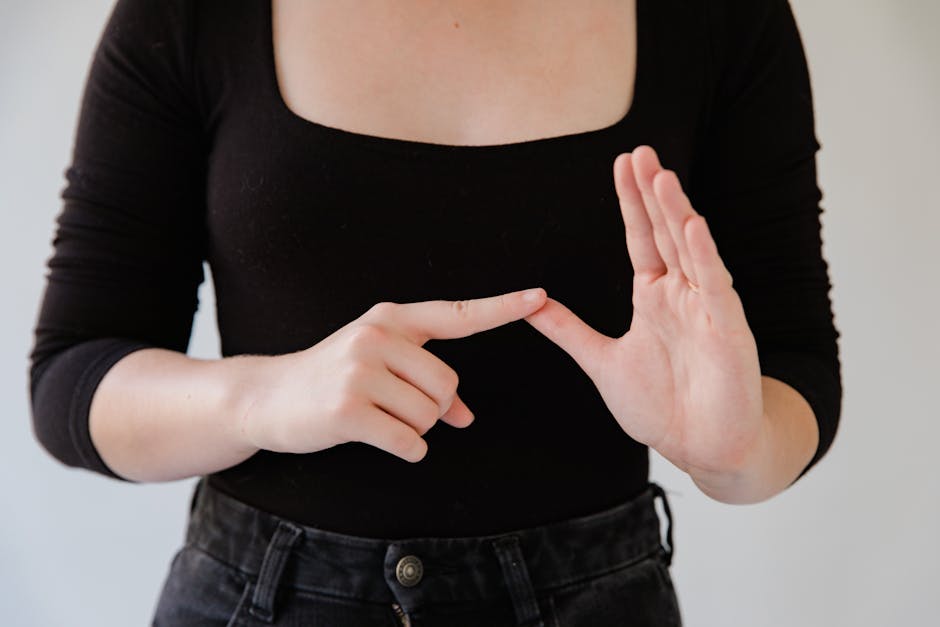
The sign for “identify, recognise, acknowledge” in NZSL encompasses the idea of recognizing someone or something. This sign is commonly used in everyday conversations to affirm familiarity or to highlight the acknowledgment of a person, place, or idea within the New Zealand Deaf community.
Table of Contents
How to Sign “Identify, Recogniseacknowledge, Recognitiontautuhi, Whakaaeverb” in NZSL
- Start with your dominant hand in a flat handshape (similar to an “A” handshape but with fingers extended).
- Position your hand at around chest height, facing towards the person you are signing to.
- Move your hand slightly forward while maintaining eye contact with your audience.
- As your hand moves forward, slightly nod your head to indicate recognition or acknowledgment.
- Finish the sign by bringing your hand back to the starting position, if necessary, to reinforce the meaning.
Common Mistakes
- Forgetting to maintain eye contact, which is crucial for conveying the sign’s meaning in NZSL.
- Using too much movement; the sign should be subtle and clear, not overly exaggerated.
- Incorrect handshape; ensure the hand is flat and fingers extended, not in a fist or bent position.
NZSL vs ASL
In NZSL, the sign for “identify” involves a specific handshape and movement that differs from ASL. While ASL may use a different handshape or gesture, NZSL incorporates unique signs influenced by local culture and the Māori language. This reflects the rich diversity of signs within the New Zealand context.
Related Signs
- (All Of) You – A sign to refer to a group or collective.
- (Baby’s) Dummy – A sign used when talking about infant pacifiers.
- (Be) Careful – A sign to express caution or the need to be careful.
- (Be) Passive – A sign referring to a passive state or behavior.
Frequently Asked Questions
How do I use this sign in a sentence?
You can use the sign to say something like “I recognize you” by combining it with the sign for “I” (pointing to yourself) and “you” (pointing to the other person).
Are there regional variations of this sign in New Zealand?
While the sign is generally consistent across New Zealand, some regions may have slight variations in hand movement or facial expressions, so it’s always good to observe local signers.
What are some signs similar to this one?
Related signs include “know” and “remember,” which have their own unique movements but convey related concepts of recognition and familiarity.
What tips do you have for learning this sign?
Practice in front of a mirror to check your handshape and movement. Watching native signers and mimicking their expressions can also help you master the sign.
Is this sign used in formal settings?
Yes, this sign can be used in both formal and informal settings, especially when acknowledging people in meetings or presentations.
Can I use this sign for things other than people?
Absolutely! You can use it to acknowledge ideas, concepts, or even places, making it quite versatile in conversation.
Practice This Sign
Try signing Identify, Recogniseacknowledge, Recognitiontautuhi, Whakaaeverb with your camera and get AI coaching on your handshape, movement, and location.
Free · No signup required