
Handstand (variant, 2) in New Zealand Sign Language (NZSL)
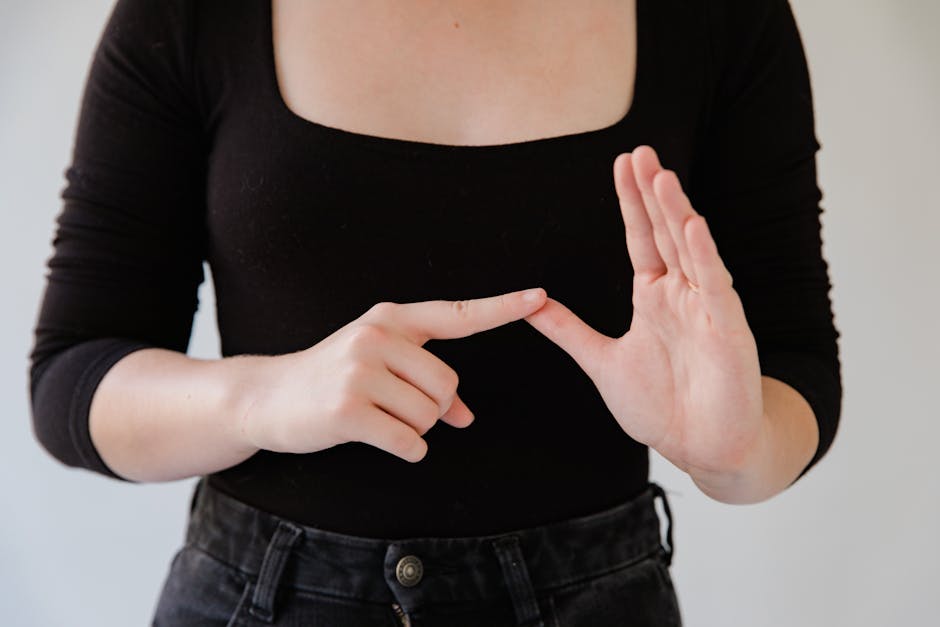
The sign “handstanddo a handstandporotētekeverb” is used in the New Zealand Deaf community to describe the action of performing a handstand. It’s commonly used in sports contexts, gymnastics, or when discussing physical activities. This sign showcases the vibrant use of NZSL, which became an official language of New Zealand in 2006, reflecting the cultural richness of the Deaf community.
Table of Contents
How to Sign “Handstanddo A HandstandporotēTekeverb” in NZSL
- Start with both hands open, palms facing down.
- Position your hands about shoulder-width apart in front of you.
- With a determined facial expression, move your hands upwards as if pushing off the ground.
- Simultaneously, bend your knees and lift your feet off the ground, bringing them upwards.
- Maintain a steady hand position while keeping your body straight, resembling a handstand.
- Hold the position for a moment to indicate completion before returning to a neutral stance.
Common Mistakes
- Some learners may forget to maintain a straight body position, which can make the sign unclear.
- Using a flat hand instead of an open hand can lead to confusion with other signs.
- Not incorporating facial expressions can make the sign less expressive and harder to understand.
NZSL vs ASL
In NZSL, the sign for “handstand” involves a more pronounced upward movement with both hands, while in ASL, the sign may be more isolated to one hand. Additionally, NZSL incorporates unique cultural influences and signs that differ from ASL, reflecting its own identity.
Related Signs
- (All Of) You – A sign used to address multiple people.
- (All Of) Youyou Allkoutou (Katoa)Pronoun – A variant of addressing a group.
- (Baby’S) Dummy – Refers to a baby’s pacifier.
- (Be) Careful – A sign used to advise caution.
- (Be) Passive – Indicates a passive state or action.
Frequently Asked Questions
How can I use “handstand” in a sentence?
You can say, “I can do a handstand,” by combining the sign with your personal pronoun sign and the action.
Are there regional variations of this sign in New Zealand?
Yes, while the basic sign remains consistent, some regions may have slight variations in movement or facial expressions.
What are some signs similar to “handstand”?
Signs related to gymnastics or other sports might be considered similar, such as “cartwheel” or “tumble.”
What tips can help me learn this sign better?
Practice in front of a mirror and watch fluent signers to improve your technique and confidence.
How do I express excitement when performing this sign?
Use an enthusiastic facial expression and a lively movement to convey excitement when signing “handstand.”
Can children learn this sign easily?
Yes, children often pick up physical signs like “handstand” quickly, especially through play and practice.
Is there a sign for “handstand” in te reo Māori?
While there isn’t a direct te reo Māori sign for “handstand,” incorporating Māori elements into your signing can enrich the expression.
Practice This Sign
Try signing Handstanddo A HandstandporotēTekeverb with your camera and get AI coaching on your handshape, movement, and location.
Free · No signup required