
Age, Old in New Zealand Sign Language (NZSL)
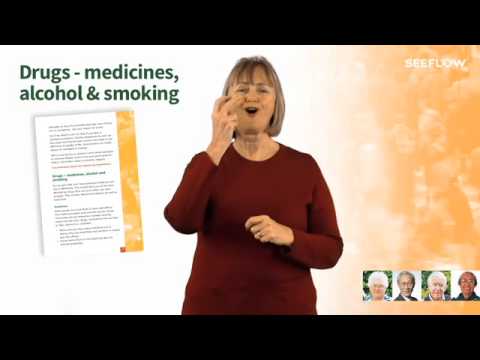
The sign for “age” or “old” in NZSL is used to discuss a person’s age or to describe someone as elderly. This sign is commonly used in everyday conversations within the New Zealand Deaf community, especially when talking about family, friends, or community members. It’s a fundamental part of expressing age-related concepts in NZSL.
Table of Contents
How to Sign “Age, Old” in NZSL
- Start with your dominant hand in a flat handshape (fingers extended and together).
- Position your hand near your chin, with the palm facing inward.
- Move your hand downward along the side of your face, maintaining the flat handshape.
- As you move your hand down, slightly tilt your head forward to convey the idea of age or becoming older.
- Use a neutral facial expression or a slight frown to emphasize the meaning of “old.”
Common Mistakes
- Forgetting to use the appropriate facial expressions, which can affect the sign’s meaning.
- Using a closed fist instead of a flat handshape, which can lead to confusion with other signs.
- Not moving the hand down far enough, which may make the sign unclear or misunderstood.
NZSL vs ASL
In NZSL, the sign for “age” or “old” involves a downward motion along the side of the face, while in ASL, a different sign may be used that does not involve the face. This highlights how NZSL has unique characteristics influenced by its cultural context, including elements from British Sign Language (BSL) and te reo Māori.
Related Signs
- (Be) Born, (Give) Birth – Discusses the act of being born.
- (Be) Careful – A sign to express caution.
- (All Of) You – A pronoun used to address a group.
- (Baby’S) Dummy – Refers to a pacifier for infants.
- (Be) Passive – A sign indicating a passive state.
Frequently Asked Questions
How can I use “age” in a sentence?
You might say, “He is old,” using the sign for “age” to express the person’s age.
Are there regional variations for this sign in New Zealand?
While the sign is generally consistent, some regions may have slight variations in hand movement or facial expressions.
What signs are similar to “old” in NZSL?
Signs like “young” or “adult” are related as they also describe age categories.
What tips can help me learn this sign?
Practice in front of a mirror to ensure your handshape and facial expressions are correct.
Can I use this sign in formal settings?
Yes, it’s appropriate to use in both casual and formal contexts when discussing age.
Is the sign for “old” different for people versus objects?
The context may change how you express age, but the sign remains the same for describing people.
Practice This Sign
Try signing Age, Old with your camera and get AI coaching on your handshape, movement, and location.
Free · No signup required