
Accident Compensation Corporation in New Zealand Sign Language (NZSL)
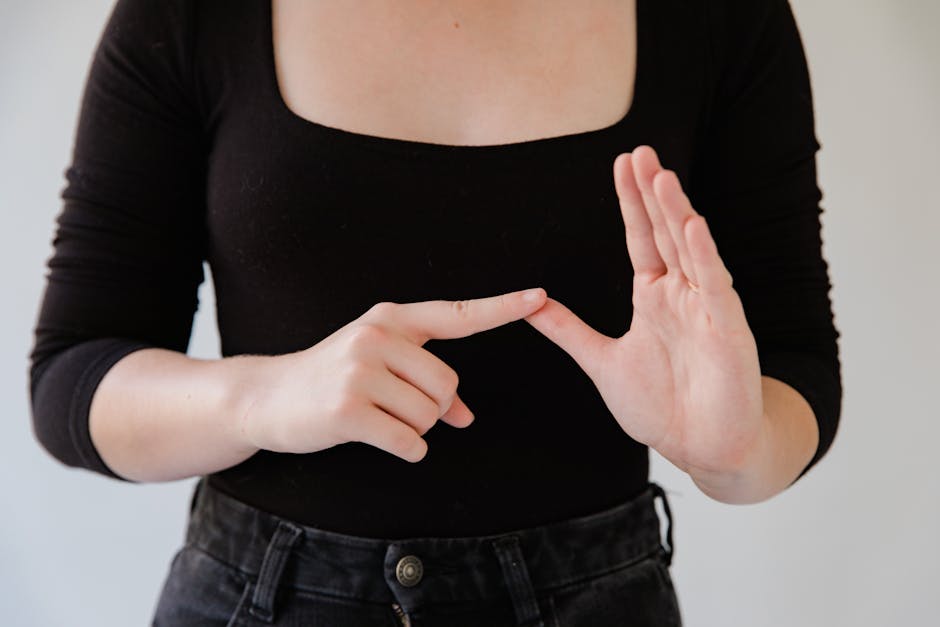
The sign for “accident compensation corporation” refers to the organization that provides support and compensation for individuals who have been injured in accidents. This sign is commonly used in discussions about injury claims, workplace safety, and legal matters within the New Zealand Deaf community. It encompasses both the concept of accidents and the assistance available for those affected.
Table of Contents
How to Sign “Acc, Accidentaccident Compensation Corporationte Kaporeihana āWhina Hunga Whara, Aituānoun” in NZSL
- Start with your dominant hand in the shape of a “C” (the fingers curved and thumb extended). Position this hand near your chest.
- Move the “C” hand forward in a fluid motion, while your non-dominant hand forms a flat “B” handshape, palm facing down, positioned below the “C” hand.
- As you move the “C” hand forward, slightly tilt your head forward and raise your eyebrows to indicate that you are sharing important information.
- Finish the sign by bringing both hands together, with the “C” hand resting on top of the “B” hand, representing the union of accident and assistance.
Common Mistakes
- Forgetting to use facial expressions, which are crucial in NZSL to convey meaning and emotion.
- Incorrectly positioning the hands, which can lead to confusion with other signs.
- Not coordinating the movement of both hands, making the sign appear disconnected or unclear.
NZSL vs ASL
In NZSL, the sign for “accident compensation corporation” has a unique handshape and movement that differs from ASL. While ASL may use a more straightforward representation, NZSL incorporates cultural nuances and the emphasis on facial expressions to convey the sign’s meaning effectively.
Related Signs
- (Be) Careful – A sign used to advise caution.
- (Be) Passive – Refers to a non-active state or behavior.
- (All Of) You – A sign for addressing a group directly.
- (Baby’s) Dummy – A sign for a pacifier.
- (Be) Born, (Give) Birth – Related to the beginning of life and family.
Frequently Asked Questions
How can I use this sign in a sentence?
You might say, “I am applying for support from the accident compensation corporation” while signing the key terms.
Are there regional variations for this sign?
While the sign is widely understood across New Zealand, some regional variations may exist, particularly in the way the hand shapes are executed.
What similar signs should I learn?
Consider learning related signs like “careful” and “passive” to expand your vocabulary in safety and health contexts.
What are some tips for learning this sign?
Practice in front of a mirror to check your handshape and facial expressions, and try to use the sign in conversations to reinforce your learning.
Can I use this sign in formal settings?
Yes, it’s appropriate to use this sign in both formal and informal settings, especially when discussing legal matters related to accidents.
Is this sign used in other contexts?
This sign is primarily used in discussions about compensation and accidents, but it can also relate to workplace safety topics.
Practice This Sign
Try signing Acc, Accidentaccident Compensation Corporationte Kaporeihana āWhina Hunga Whara, AituāNoun with your camera and get AI coaching on your handshape, movement, and location.
Free · No signup required