
Now, Present, At The Moment, Contemporary, Current in New Zealand Sign Language (NZSL)
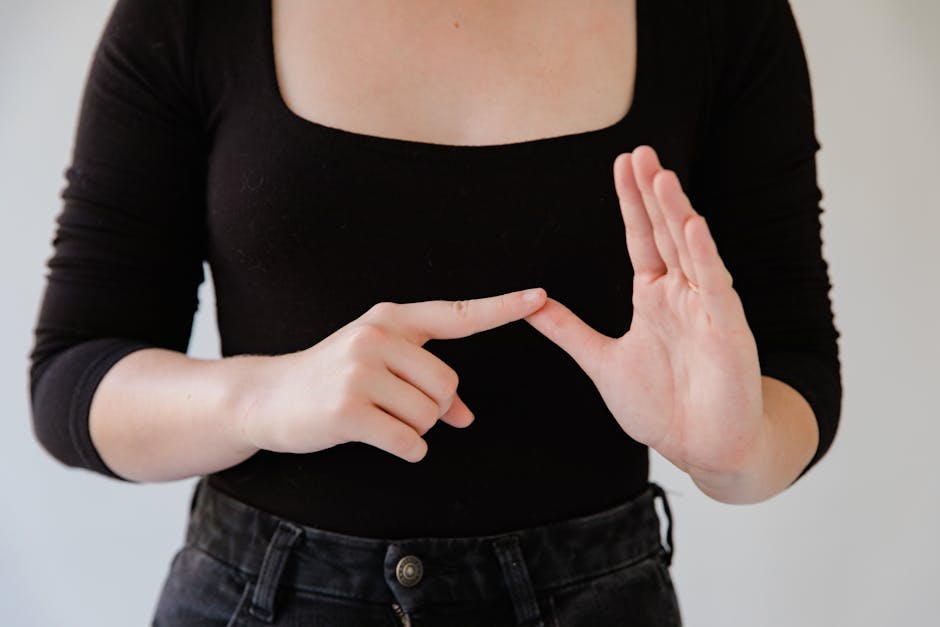
The NZSL sign for “now” (ināianei) conveys the concept of the present moment or current time. It’s commonly used in everyday conversations among the Deaf community to indicate something happening right now or to refer to ongoing situations. This sign is integral in expressing immediacy and current conditions.
Table of Contents
How to Sign “Nowat Present, At The Moment, At The Present Time, Contemporary, Current, CurrentlyināIaneiadverb” in NZSL
- Start with both hands in a flat “B” handshape (palms facing down).
- Position your hands in front of your torso, about shoulder-width apart.
- Move both hands slightly outward and then bring them back towards your body while maintaining the flat handshape.
- As you sign, keep a neutral facial expression or slightly raise your eyebrows to emphasize the present moment.
Common Mistakes
- Omitting the hand movement, which can lead to confusion about the sign’s meaning.
- Using a fist instead of a flat handshape, which may change the meaning entirely.
- Failing to incorporate facial expressions, which are essential in NZSL for conveying emotion and context.
NZSL vs ASL
In NZSL, the sign for “now” has a distinct handshape and movement compared to ASL, where the sign typically involves a different motion and hand configuration. This highlights the unique development of NZSL, influenced by both British Sign Language (BSL) and local signs.
Related Signs
- (All Of) You – A sign used to address a group directly.
- (Be) Careful – A sign to indicate caution or alertness.
- (Be) Passive – A sign used to express passivity or inaction.
Frequently Asked Questions
How can I use “now” in a sentence in NZSL?
You can use “now” to indicate something immediate, such as “I am eating now” by combining the sign for “eat” with “now.”
Are there regional variations for this sign in New Zealand?
While “now” is generally consistent across New Zealand, some regions may have slight variations in hand movements or facial expressions.
What are some similar signs to “now”?
Related signs include “today,” “current,” and “present,” each capturing various nuances of time and immediacy.
What tips do you have for learning this sign?
Practice in front of a mirror to ensure your handshape and facial expressions are correct. Observing fluent signers can also help reinforce your skills.
Can I use this sign in formal contexts?
Yes, “now” is appropriate in both casual and formal contexts. It helps convey urgency or immediacy in discussions.
How does this sign connect with te reo Māori?
The influence of te reo Māori can enhance understanding of time concepts in NZSL, as both languages share cultural contexts.
Practice This Sign
Try signing Nowat Present, At The Moment, At The Present Time, Contemporary, Current, CurrentlyināIaneiadverb with your camera and get AI coaching on your handshape, movement, and location.
Free · No signup required