
Et Langue Des Signes en Langue des Signes Française (LSF)
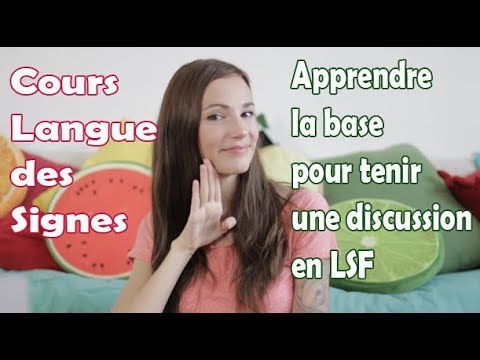
The sign “et langue des signes” translates to “and sign language” in English. This phrase is often used in discussions about communication methods within the Deaf community and when emphasizing the importance of sign language in conjunction with other languages. It’s a vital expression for promoting inclusivity and understanding in diverse language contexts.
Table of Contents
How to Sign “Et Langue Des Signes“
- Start with your dominant hand in a flat handshape (like the letter “B”) and position it in front of your chest, palm facing outward.
- Move your dominant hand slightly away from your body and then bring it back towards your chest while keeping the flat shape.
- Next, use both hands to form the sign for “langue” by placing your dominant hand in front of your mouth, as if you are mimicking speaking, while your non-dominant hand remains flat in front of you.
- For “des signes,” open both hands into a “5” handshape and move them outward from your body, as if you are showing various signs being made.
- Throughout the signing, maintain an engaging facial expression, as facial expressions play a crucial role in conveying meaning in ASL.
Common Mistakes
- Forgetting to incorporate facial expressions, which can lead to a lack of clarity.
- Using the wrong handshape; ensure that your hands are in the correct positions throughout the sign.
- Rushing through the movements, which can make the sign difficult to interpret.
Related Signs
- 12 Langue Des Signes – Refers to a specific series of signs in sign language.
- 1200 Signes Langue Des Signes Française – A phrase highlighting a rich vocabulary in French sign language.
- 1 – The sign for the number one, often used in counting or listing.
- 10 – Represents the number ten, useful in various contexts.
- 100 – The sign for one hundred, frequently used in discussions about quantities.
Frequently Asked Questions
How can I use “et langue des signes” in a sentence?
You might say, “I speak French et langue des signes.” This shows the importance of both spoken and signed communication.
Are there regional variations for this sign?
Yes, variations may exist based on local dialects, but the core concept remains consistent across communities.
What are some similar signs?
Signs like “langue” and “sign” are related and are often used together in discussions about language.
How does this sign compare to BSL?
While ASL and BSL are distinct, the concept of combining spoken and signed language is universal in both communities.
What are some teaching tips for this sign?
Practice with others to get feedback, and focus on facial expressions to enhance communication.
Practice This Sign
Try signing Et Langue Des Signes with your camera and get AI coaching on your handshape, movement, and location.
Free · No signup required