
Saddle in British Sign Language (BSL)
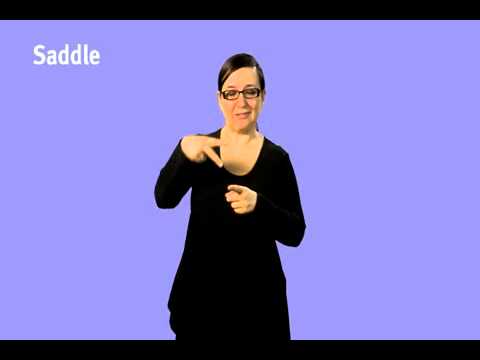
The sign for “saddle” is used in the UK Deaf community to refer to the equipment placed on a horse’s back for riding or control. It’s commonly used in conversations about equestrian activities, horse care, or when discussing different types of riding. This sign can also come up in stories or anecdotes related to horses.
How to Sign “Saddle” in BSL
- Start with both hands in a flat shape, palms facing down.
- Position your hands slightly apart, about shoulder-width.
- Bring your hands together in a slight curve, mimicking the shape of a saddle sitting on a horse’s back.
- As you bring your hands together, slightly tilt your head forward, showing focus on the action.
- Finish with your hands resting together, maintaining the flat shape, and hold the pose for a moment to emphasize the sign.
Common Mistakes
- Forgetting to use the flat handshape, which can lead to unclear communication.
- Not using appropriate facial expressions to indicate focus or emphasis.
- Making the movement too fast, which can make the sign difficult to understand.
BSL vs ASL
In BSL, the sign for “saddle” involves a handshape that mimics the object resting on a horse’s back, while in ASL, the sign may differ significantly in shape and movement, focusing more on the action of placing or adjusting the saddle rather than its form. This highlights the distinct visual language and grammar structures in each sign language.
Related Signs
- Horse – The sign for a horse, often used in conjunction with “saddle.”
- Ride – This sign refers to the action of riding on a horse.
- Equine – A sign relating to horses in general.
- Groom – This sign refers to grooming a horse, often discussed alongside saddling.
Frequently Asked Questions
How can I use “saddle” in a BSL sentence?
You can say, “I want to saddle the horse,” by first signing “I,” then “horse,” followed by “saddle.”
Are there regional variations for this sign?
While the sign is generally consistent across the UK, some regions may have slight variations in hand movement or speed.
What similar signs should I learn?
Consider learning related signs like “horse,” “ride,” and “groom,” as they often come up in the same context.
What tips do you have for learning this sign?
Practice in front of a mirror to ensure your handshape and movement are correct, and try to incorporate facial expressions to enhance understanding.
Can I use this sign in storytelling?
Absolutely! It fits well in narratives about horses or equestrian events, adding a visual element to your storytelling.
Is the sign the same for all types of saddles?
The basic sign remains the same, but you can modify it slightly to refer to specific types of saddles if needed.
Practice This Sign
Try signing Saddle In Bsl with your camera and get AI coaching on your handshape, movement, and location.
Free · No signup required