
Palpitation in British Sign Language (BSL)
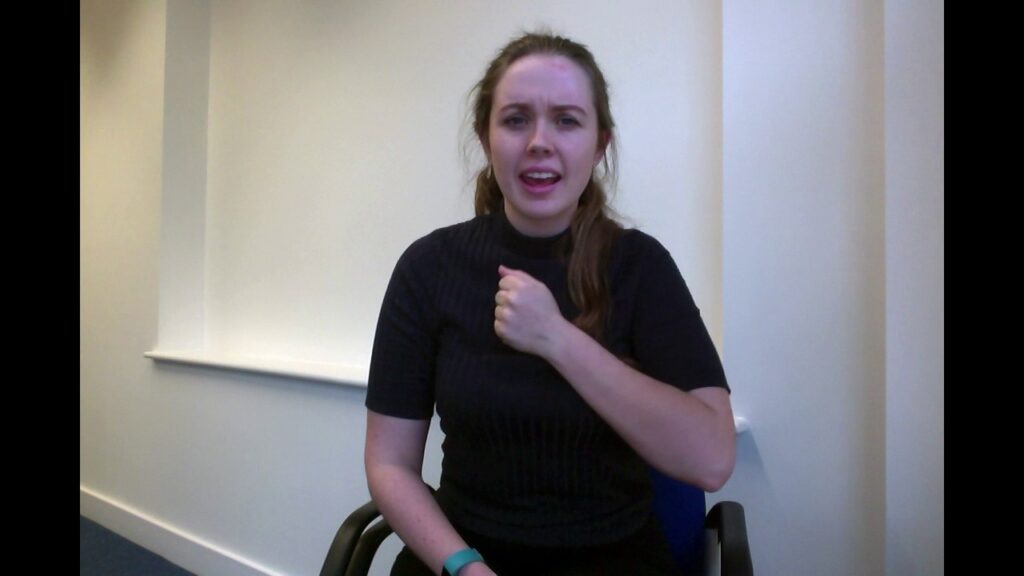
The sign for “palpitation” in British Sign Language (BSL) is used to describe a feeling of rapid or irregular heartbeat. This sign can be useful in various contexts, such as during conversations about health or when discussing emotions related to anxiety or excitement.
How to Sign “Palpitation” in BSL

- Start with both hands in a flat ‘B’ handshape (palm facing down).
- Position your hands at chest level, slightly apart, to represent your heart.
- Make a gentle, rhythmic movement downwards, moving your hands closer together as if mimicking the heartbeat.
- While signing, maintain a facial expression that reflects the feeling of a strong or rapid heartbeat; you can raise your eyebrows slightly to show intensity.
- Optionally, you can use your non-dominant hand to support your dominant hand, enhancing the movement.
Common Mistakes
- Forgetting to use facial expressions, which are crucial for conveying the meaning and emotion of the sign.
- Using an incorrect handshape; ensure you are using the flat ‘B’ handshape rather than a fist or other shapes.
- Not maintaining the rhythm in the movement; the sign should feel fluid and mimic the heartbeat.
BSL vs ASL
In American Sign Language (ASL), the sign for “palpitation” differs significantly from BSL. ASL often uses different handshapes and movements, reflecting its unique grammar and structure. BSL emphasizes non-manual features and facial expressions more prominently than ASL, which tends to rely on hand shapes and movements.
Related Signs
- Heart – Represents the organ and can be used in emotional contexts.
- Anxiety – Used to discuss feelings of worry or nervousness.
- Excitement – Demonstrates feelings of thrill or enthusiasm.
- Health – Relates to discussions about well-being.
- Emotion – General term for feelings and emotional states.
Frequently Asked Questions
How can I use “palpitation” in a BSL sentence?
You can use it in a sentence like, “I feel a palpitation in my heart when I see him,” by first signing “I” then “feel” followed by “palpitation” and finishing with the sign for “heart.”
Are there regional variations for this sign in the UK?
Generally, the sign for “palpitation” is consistent across the UK, but some variations might exist in the speed or intensity of the movement based on regional signing styles.
What are some signs similar to “palpitation”?
Signs like “anxiety,” “excitement,” and “heart” are related, as they all deal with feelings and emotions linked to physical sensations.
What tips can help me learn this sign better?
Practice in front of a mirror to monitor your handshape and facial expressions. Watching native BSL signers can also help you grasp the nuances.
Is the movement important in this sign?
Yes, the rhythmic movement is essential as it mimics the heartbeat, making the sign more expressive and clear.
Can I use this sign in a medical context?
Absolutely! It’s a suitable sign to use in conversations about health, especially when discussing heart conditions or feelings of anxiety.
Practice This Sign
Try signing Palpitation In Bsl with your camera and get AI coaching on your handshape, movement, and location.
Free · No signup required